
ADHD and Relationships: What the Research Reveals About Why This Pattern Feels So Hard to Break
ADHD rarely shows up in a relationship the way either partner expects. It doesn’t arrive with a warning label. It arrives as a pattern: one partner forgetting important conversations, one partner perpetually exhausted by carrying the relational load, and both of them stuck in a cycle of frustration, resentment, and disconnection that neither can quite explain.
If this sounds familiar, what you’re experiencing has a name. And more importantly, it has an explanation that has nothing to do with how much you love each other.
The Research Is Clear: ADHD Changes Everything About How a Relationship Functions
Attention deficit hyperactivity disorder affects approximately 4 to 5 percent of adults in the United States, according to data from the National Comorbidity Survey Replication. But its impact inside a relationship is disproportionate to those numbers, because ADHD doesn’t just affect the individual who carries the diagnosis. It fundamentally reshapes the relational dynamic between both people.
Russell Barkley, one of the world’s foremost authorities on ADHD and among its most cited researchers, has described the condition as primarily a disorder of executive function and self-regulation rather than simply a problem of attention. This reframing matters enormously for couples, because it explains why ADHD looks so different from the outside than it feels on the inside. The ADHD partner isn’t choosing to forget important things, arrive late, interrupt conversations, or leave projects unfinished. These behaviors are downstream of genuine neurological differences in how the brain regulates attention, time, impulse, and emotion.
Research consistently shows that adults with ADHD experience significantly higher rates of relationship breakdown than the general population. Barkley and colleagues’ longitudinal work on ADHD adults documented elevated rates of separation and divorce alongside greater reports of relationship dissatisfaction from both partners. A study by Wymbs and colleagues published in the Journal of Consulting and Clinical Psychology found that parents with ADHD faced substantially elevated divorce rates compared to parents without the diagnosis. These are not small differences, and the research points toward a consistent underlying mechanism.
Emotional Dysregulation: The ADHD Symptom No One Warns You About
When most people think of ADHD, they picture inattention and hyperactivity. What the clinical research reveals is that emotional dysregulation may be among the most relationally destructive features of the condition.
Barkley has argued compellingly across multiple publications that emotional dysregulation is not simply a comorbidity of ADHD; it is a core feature. Adults with ADHD frequently experience emotions with an intensity and immediacy that is difficult to modulate. Frustration escalates faster. Rejection, even minor or perceived rejection, can land with the force of a genuine rupture. Neutral observations register as criticism. Joy is more urgent, and disappointment cuts deeper than the situation seems to warrant.
For the partner without ADHD, this is bewildering. A mild request to clean the kitchen transforms, in seconds, into what feels like a confrontation. An attempt to revisit a previous conversation becomes an emotional flashpoint. Over time, the non-ADHD partner begins to walk on eggshells, managing their tone, choosing words carefully, and bracing for reactions that feel disproportionate to what actually happened.
That pattern has a name in relationship research: mutual dysregulation. One partner’s nervous system reads cues from the other, escalation feeds escalation, and both people end up flooded and reactive in ways neither planned. In the context of ADHD, this cycle activates more frequently and with less provocation than in couples where ADHD is not a factor. It is one of the fastest ways a relationship ends up caught in a destructive pattern that neither person chose.
The Hyperfocus Courtship and What Comes After
Melissa Orlov, whose 2010 book The ADHD Effect on Marriage remains one of the most clinically informed treatments of this subject available, describes a phenomenon she calls the hyperfocus courtship.
ADHD brains are not uniformly inattentive. When something is genuinely novel, personally compelling, or emotionally stimulating, the ADHD brain can produce extraordinary levels of focused engagement. In early romantic relationships, a new partner often triggers exactly this response. The ADHD partner is fully present, intensely attentive, and deeply engaged. The partner without ADHD experiences this as remarkable chemistry and genuine connection.
Then, over time, the novelty fades. The ADHD brain shifts toward whatever is next. The partner who felt so seen and prioritized now feels invisible, and the ADHD partner often has limited awareness of what changed, because the shift happened at a neurological level rather than a conscious one.
This transition from hyperfocus to apparent disengagement is one of the most common precipitating wounds in ADHD relationships. The non-ADHD partner frequently interprets it as a signal that the original connection wasn’t real, or that they no longer matter, or that the ADHD partner simply doesn’t care anymore. None of these interpretations are accurate. But without an understanding of the underlying mechanism, they feel completely logical.
The Parent-Child Dynamic: How Resentment Becomes a Structure
Over time, many ADHD couples develop what Orlov and other clinicians describe as the parent-child dynamic. It emerges not from anyone’s conscious intention, but from a practical logic that takes hold gradually.
The non-ADHD partner, tired of waiting for things to be done consistently, begins managing, reminding, and covering. They take on the household planning, the financial tracking, the social scheduling, the emotional management of family life. They become, in effect, the executive function their partner’s brain struggles to provide reliably.
The ADHD partner, for their part, often feels simultaneously controlled and inadequate. They know they’re dropping things. They hate it. The reminders, however well-intentioned, land as criticism. A recognizable pattern begins to develop: the ADHD partner withdraws, shuts down, and retreats into the belief that nothing they do will ever be enough. The non-ADHD partner, feeling increasingly alone in the relationship, escalates their pursuit, intensifies their requests, and tries harder to reach someone who appears to be closing off entirely.
This is the riptide in an ADHD relationship. And like all riptides, it pulls both partners further under the harder they individually try to fight it. The answer is never to swim harder against the current. The answer is to understand what the current actually is, and to find a way out together.
What the Non-ADHD Partner Is Carrying
The research on ADHD’s relational impact frequently focuses on the symptoms of the ADHD partner. What is less consistently addressed in popular discussions is what happens to the person without ADHD who has been living inside that dynamic for years.
Research published in the Journal of Attention Disorders examining the marital and family functioning of adults with ADHD documented not only lower relationship satisfaction in the ADHD group, but substantial distress in the non-ADHD spouses as well. Partners reported higher rates of depression, greater feelings of loneliness, and a pervasive sense that the relationship was imbalanced in ways that couldn’t be resolved through individual effort alone.
These findings are consistent with what emerges consistently in clinical practice. The non-ADHD partner often arrives carrying the accumulated weight of years of over-functioning. They are exhausted, frequently resentful, and often ashamed of that resentment because they know their partner isn’t doing this deliberately. Loving someone whose brain works differently doesn’t make the weight lighter. It just makes it harder to put down.
Why Willpower and Good Intentions Are Not Enough
One of the most important things research tells us about ADHD in relationships is that insight and intention alone are not sufficient to change the patterns. An ADHD partner who sincerely wants to show up consistently, regulate their emotions, remember what matters, and follow through will still encounter executive function limitations that no amount of effort directly overrides.
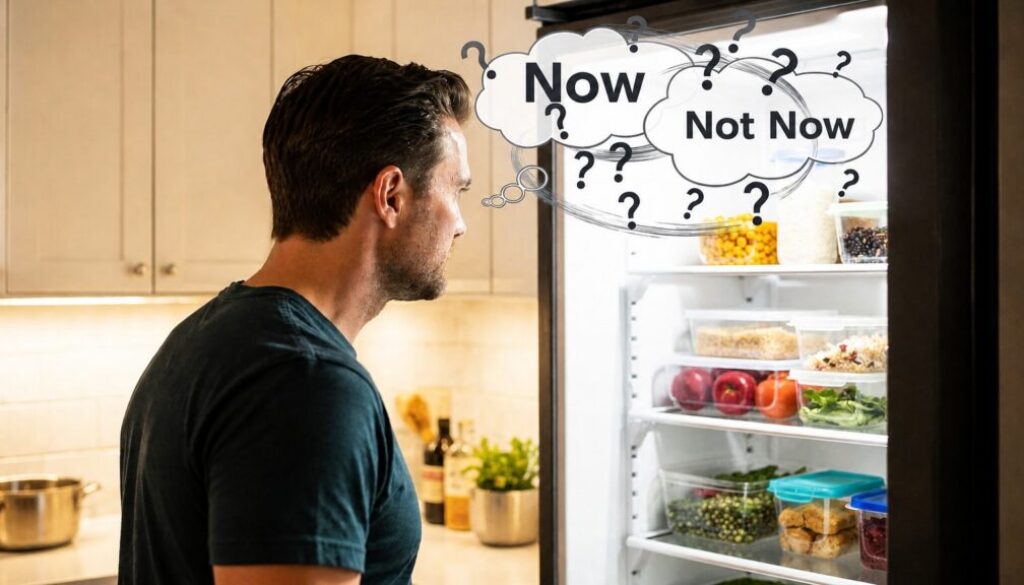
For the ADHD brain, dopamine dysregulation affects motivation and time perception (chronically existing in “Now” vs. “Not Now”).
Barkley’s work on self-regulation in ADHD consistently makes the point that external systems and environmental scaffolding are more effective than relying on internal motivation or willpower alone. What this means for couples is that you need tools that work with how the ADHD brain actually functions, not against it. And both partners need a shared understanding of the pattern that replaces blame with a more accurate frame.
This is also why couples in ADHD relationships often feel as though they have tried everything and nothing sticks. Individual effort in isolation, without a structural change in the dynamic itself, is a bit like bailing water from a boat without addressing the hole. The water keeps coming back. The pattern keeps reasserting. Not because either person lacks commitment, but because the cycle has a logic of its own that good intentions alone cannot interrupt.
What Actually Helps: Moving From Blame to a Shared Framework
Research on couples navigating ADHD points toward several elements that distinguish relationships that function well from those that remain stuck.
A shared and accurate understanding of what ADHD actually is, and how it specifically manifests in this relationship, replaces the most damaging interpretive framework: the one that reads ADHD behaviors as signals of not caring, not trying, or not valuing the relationship.
Structured agreements and clear communication practices, rather than reliance on memory or emotional availability in any given moment, reduce the load on executive function and reduce the number of moments where limitations become the flashpoint for conflict.
An understanding of each partner’s internal experience during conflict, what they are actually feeling on the inside, what their nervous system is doing, and what they genuinely need in those moments, creates the foundation for communication that speaks to what is underneath rather than reacting to the surface behavior.
This is the work that the Become One Again framework is designed to support. The Riptide concept, the Fixer and Connector archetypes, the tools for interrupting the cycle before it escalates, and the structured practices for rebuilding emotional safety all map directly onto what ADHD relationships require. The Fixer’s inner dialogue of “I can never get this right” is rarely more present or more painful than in an ADHD relationship. The Connector’s inner dialogue of “I am not a priority” is rarely more consistently reinforced. And the cycle that develops between those two positions is precisely the kind of pattern that structured, practiced intervention is built to interrupt.
You Don’t Have to Figure This Out Alone
If ADHD is in your relationship, whether it is formally diagnosed or simply something you are beginning to recognize, you are navigating something genuinely difficult. The research is clear that these dynamics are real, that they are common, and that they carry significant costs for both partners when they go unaddressed. The research is equally clear that understanding the pattern changes everything.
My Become One Again programs were built for exactly this kind of work. The eight-week Marriage Rescue Plan gives couples a structured, week-by-week framework to stop the fighting, rebuild emotional safety, understand each other’s internal experience, and restore genuine connection, whether ADHD is part of the picture or not.
The six-week Communication Course for Couples provides a deep foundation in the Fixer and Connector framework and the communication tools that make breaking the cycle actually possible.
Both programs include 6 private one on one coaching sessions to help re-enforce what you’re learning in each course.
If you’re ready to understand what is actually running your relationship and to build something better than the pattern you’ve been caught in, the free Fixer or Connector quiz at becomeoneagain.com is the place to start. It takes about five minutes and typically gives couples more clarity about their relational dynamic than years of trying to figure it out on their own.
You can also schedule a free 20-minute consultation at becomeoneagain.com.
The pattern is the problem. Not the person. That is true whether ADHD is in the room or not.