

Couples Corner

How to Rekindle Desire After Years of Disconnection
Why Pressure Backfires and Connection Comes First
How do we rekindle desire after years of disconnection?
You don’t start by focusing on the physical part. You start by changing the relational environment in which desire has been trying to survive.
When couples come to me worried that the spark is gone, they often treat desire as if it were a light switch. One partner wants to turn it back on. The other feels watched, evaluated, or pressured to prove that the relationship is still alive. Every unsuccessful attempt becomes more evidence that something is wrong.
But desire is not a fixed personality trait, and it is not a command performance. It is a state influenced by emotional safety, stress, health, resentment, feeling valued, the quality of communication, and whether touch still feels like an invitation instead of a demand.
That is hopeful, because states can change. It is also honest, because desire does not return through pressure, guilt, or pretending that years of disconnection never happened.
The Spark Is Usually Not the First Thing You Lost
“Desire is not something you can demand from your partner. It is something the two of you create conditions for together.”
Note: this topic is question 46 of the Top 100 Questions I Hear as a Couples Therapist. For more questions, check out the full list.
Most couples didn’t wake up one morning and simply stop wanting each other. The distance accumulated.
A bid for attention was missed. An argument never really got repaired. One partner began carrying too much of the practical load. Affection became less frequent because every touch seemed to come with an expectation. Conversation narrowed to children, schedules, bills, and work. Then both people adapted to the loneliness in different ways.
One pursued harder. The other withdrew further. One complained about sex. The other began bracing for the complaint. Eventually, the couple called it a desire problem, even though the physical distance was sitting on top of emotional injuries, exhaustion, and years of feeling unseen.
This is why “just schedule sex” may not be enough. Scheduling can protect time, and that can be useful. But a calendar can’t create safety, repair resentment, or make a pressured partner feel free. If the conditions remain the same, the appointment simply puts a date and time on the same old disconnect.
Desire Does Not Always Arrive First
Many people expect sexual desire to appear spontaneously, before any affectionate or erotic contact begins. That happens, especially early in a relationship. It is not the only healthy pathway.
Rosemary Basson’s model of sexual response helped clinicians recognize that desire can also be responsive. In responsive desire, a person may begin from a neutral place, freely choose to engage in closeness, and discover interest or desire after positive stimulation and connection begin. The sequence is not “I feel desire, so I connect.” Sometimes it is “I feel safe and open enough to connect, and desire begins to emerge.”
Read Basson’s foundational review in the Journal of Sex and Marital Therapy.
This matters because a decrease in spontaneous desire does not automatically mean attraction is dead. It may mean the pathway has changed. Long term relationships, parenting, stress, sleep loss, caregiving, health changes, medication, hormonal shifts, and accumulated hurt can all affect how easily desire becomes available.
At the same time, responsive desire must never become a clinical sounding excuse for pressure. A freely chosen “I am open to seeing how this feels” is not the same as “I have to do this so my partner will not be upset.” Research on sexual motivation finds that intimacy focused, approach based reasons are associated with greater satisfaction, while having sex to avoid conflict or a partner’s disappointment is associated with lower satisfaction.
Read the research on sexual motivation and satisfaction.
Willingness means willing curiosity with full permission to pause or stop. It doesn’t mean obligation. No is a complete answer. Not yet is also an answer. Consent remains active from beginning to end.
Desire Grows in a Relational Environment
One of the clearest findings in this area is that feeling understood, valued, and cared for matters. In a series of three studies, Gurit Birnbaum and colleagues found that perceived partner responsiveness was associated with greater sexual desire, particularly among women. Responsiveness means more than being nice. It means communicating, through behavior, “I understand you, I care about what you feel, and your needs matter to me.”
Read the partner responsiveness study in the Journal of Personality and Social Psychology.
That does not mean every person needs perfect emotional harmony before wanting sex. It means desire is contextual. The same touch can feel connecting in one environment and intrusive in another. The difference may be the argument that was repaired, the apology that never came, the workload that remains unequal, or whether affection has been allowed to exist without becoming a transaction.
Research on sexual communal motivation adds another important distinction. Caring about a partner’s sexual needs can support desire and satisfaction when that care is autonomous and mutual. Consistently placing a partner’s needs above your own, especially from pressure or obligation, is associated with worse outcomes. Mutual responsiveness is not self abandonment.
Read the dyadic research on autonomous and controlled sexual motivation.
The Five Layers of True Intimacy
In Week 6 of my Become One Again Marriage Rescue Plan, I teach couples to understand intimacy through five interconnected layers. Physical intimacy is one layer, but it does not float above the relationship by itself. It rests on everything happening underneath it.
Emotional intimacy
Can I tell you what I feel without being mocked, dismissed, corrected, or punished? Do you respond to my vulnerability with curiosity and care? Emotional intimacy is the experience of being safe enough to be known.
Intellectual intimacy
Do we still share ideas, opinions, dreams, questions, and parts of our inner world? Couples who discuss only logistics may function efficiently while feeling profoundly alone.
Experiential intimacy
Do we create memories together, or do we simply complete tasks beside each other? Shared play, novelty, and challenge help couples encounter each other outside familiar roles. Research across surveys and experiments has linked shared novel and arousing activities with greater experienced relationship quality.
Read the research on shared novel activities and relationship quality.
Spiritual intimacy
Do we know what matters most to each other? This layer may include faith, but it also includes purpose, values, meaning, and the principles that guide the life you are building together.
Physical intimacy
This includes far more than intercourse. It includes sitting close, holding hands, kissing, cuddling, sensual touch, playfulness, erotic connection, and sex. When every affectionate touch is treated as a promise of intercourse, the lower desire partner may begin avoiding all touch. Restoring physical intimacy often starts by making room for contact that has no hidden contract attached to it.
If the physical layer is struggling, ask what is happening across all five layers. Don’t assume the answer lives only in the bedroom.
Pressure Is Not Passion
When one partner feels deprived of intimacy, pressure can sound reasonable to the person applying it. “It has been weeks.” “You never initiate.” “If you loved me, you would want me.” “What is wrong with you?”
Underneath those statements may be real loneliness, fear, or grief. But pressure turns vulnerability into accusation. It teaches the other partner that intimacy is a test they are failing.
Invitation sounds different: “I miss feeling close to you. I don’t want you to feel pressured. How about we talk about what helps you feel open to affection and what shuts you down?”
The goal is not to hide your desire. Your wants matter. The goal is to express them without making your partner responsible for regulating your self worth. Desire needs room to breathe. It doesn’t thrive when one person has to protect the other from disappointment.
A Better Starting Point for Reconnection
Name the season without turning it into a verdict
Say, “We’ve been disconnected,” rather than, “We have no chemistry.” One describes a current condition. The other declares a permanent identity. Language shapes whether the conversation opens or closes.
Repair what is still sitting between you
You cannot build intimacy around injuries that both partners are required to ignore. Name the resentment, betrayal, loneliness, or inequity directly. A real repair includes acknowledging impact, validating the experience, taking responsibility without defensiveness, expressing remorse, and committing to a different behavior.
Bring back affectionate touch with no required destination
Ask what kinds of touch currently feel comforting, neutral, uncertain, or unwelcome. Start where both people genuinely feel safe. A hug can remain a hug. Cuddling doesn’t have to become a negotiation. Removing the hidden expectation gives the nervous system a chance to stop bracing.
Use invitation based language
Try “Would you be open to sitting close for a few minutes?” or “I would love to kiss you. How does that feel to you?” Clear invitations make room for a real yes, a caring no, or a not yet with an alternative. If no is punished, yes is not fully free.
Create something new together
Don’t make every reconnection attempt a serious conversation about the relationship. Take a class. Visit a new neighborhood. Cook something unfamiliar. Listen to music you loved before life became so crowded. Novelty is not a cure for unresolved harm, but shared discovery can help partners see each other as people again instead of roles in a stale conflict.
Make room for erotic communication
Couples often talk about sex only when something is wrong. Instead, create a judgment free conversation about what feels connecting, what creates pressure, what you miss, what you are curious about, and what boundaries matter. Speak in positive desires rather than complaints. “I would love more slow affection” gives your partner somewhere to move. “You never touch me correctly” creates a wall.
Consider the body, not only the relationship
Low desire and painful sex are not always relational. Medication effects, depression, anxiety, sleep problems, hormonal changes, pregnancy and postpartum changes, menopause, chronic illness, pelvic floor concerns, erectile difficulties, and pain can all matter. Pain is not something to push through. Persistent changes in desire, arousal, erections, orgasm, lubrication, or comfort deserve a conversation with an appropriate medical professional. Couples work and medical care may need to happen together.
A Conversation You Can Have Tonight
Don’t begin this conversation in bed or immediately after rejection. Choose a neutral time and ask each other:
- When have you felt most connected to me recently, even if the moment was small?
- What has been making closeness harder for you?
- Which kind of intimacy feels most available right now: emotional, intellectual, experiential, spiritual, or physical?
- What kind of affection feels safe and welcome without needing to lead anywhere?
- What is one invitation you would enjoy receiving this week?
- Is there any pain, health concern, resentment, or fear that we have been avoiding?
Listen for information, not evidence that you are unwanted. Don’t defend your intention before you understand your impact. The point of the conversation is not to secure sex that night. It is to make honesty safer than avoidance.
What Returning Desire Actually Looks Like
Rekindling desire is rarely one dramatic night. It often returns through small shifts.
A kiss lingers. A partner reaches for a hand instead of a phone. Someone names a desire without shame. Someone else says no without fearing punishment. A difficult conversation ends in repair rather than silence. The two of you laugh together and remember that your relationship contains more than responsibility.
Physical desire may return before emotional closeness for some couples. For others, emotional safety has to become believable first. There is no universal sequence and no correct frequency. The goal is not to make your relationship look sexually successful from the outside. The goal is to create a connection in which both partners can be honest, responsive, wanted, and free.
You’re not trying to recreate the beginning of your relationship. You’re building a form of desire that can belong to the people you are now.
A Structured Path Back to Intimacy
If you recognize your relationship in this article, insight may help you understand the problem, but structure is what helps you change it.
Week 6 of my Become One Again Marriage Rescue Plan focuses on rekindling emotional and physical intimacy. Couples learn the Five Layers of True Intimacy, how emotional safety affects desire, how to repair the small injuries that create distance, how to shift from pressure to invitation, and how to communicate consent and readiness with clarity. The goal is not forced closeness. It is a safer, more honest path back to one another.
The Marriage Rescue Plan is an eight week premium video program for couples who need a comprehensive process for interrupting conflict, rebuilding safety and trust, healing accumulated hurt, restoring intimacy, and creating lasting relationship practices. It includes private live couples coaching, an interactive workbook, partner access, and access to the Become One Again community.
My Become One Again Communication Course for Couples is a six week premium program for couples who need to understand the pattern underneath their arguments. It teaches the Fixer and Connector communication styles, the inner dialogue that fuels disconnection, and practical tools for listening, expressing needs, and exiting the Riptide before it takes over the relationship. It also includes private live coaching, an interactive workbook, partner access, and community support.
Explore the Marriage Rescue Plan and Communication Course at BecomeOneAgain.com
Desire is not restored by demanding proof that your partner still wants you. It is restored by creating a relationship where wanting and being wanted can feel safe again.

Can Trust Be Rebuilt After an Affair? What Recovery Actually Requires
“Trust is not rebuilt when the hurt partner finally stops asking questions. It is rebuilt when the relationship becomes safe enough that the questions no longer control it.”
Can trust actually be rebuilt after an affair?
Yes. But not every relationship will recover, and no couple should be promised that it will.
Trust after infidelity is not rebuilt through one apology, one tearful conversation, access to a phone, or a promise that it will never happen again. It returns through consistent, visible, verifiable behavior over time. The partner who had the affair has to demonstrate, not simply declare, that the relationship is safe again. The hurt partner needs room to grieve, ask necessary questions, experience anger, and make a decision without being rushed toward forgiveness.
That is the honest answer. Recovery is possible. It is also demanding. Both truths belong in the room.
Note: I’ve created a new feature on Become One Again called Top 100 Questions I Hear As A Couples Therapist and this is Question 31, so be sure to browse the site for any additional questions you may have.
Why an Affair Changes More Than Trust
When people say, “I cannot trust you,” they are rarely talking only about whether another affair will happen. They are asking whether their understanding of the relationship was real. They may question where their partner was, what previous memories now mean, who else knew, whether their health or finances were affected, and whether their own instincts can be trusted.
The injured partner can become watchful in a way that feels unfamiliar and exhausting. A delayed text, an unexpected schedule change, or a phone turned face down can trigger a wave of fear. This is not necessarily punishment or an attempt to control the relationship. It may be the nervous system scanning for danger after the world it relied on became unpredictable.
Research supports taking this response seriously, while also using careful language. One study of 73 unmarried young adults who had experienced a partner’s infidelity found that 45.2 percent reported symptoms consistent with probable infidelity related posttraumatic stress. The sample was small, young, and not representative of every betrayed partner. It does not mean infidelity automatically causes posttraumatic stress disorder. It does show that the distress can be intense and psychologically consequential.
Read the study in Stress and Health.
A separate qualitative study found that betrayed partners often described the experience as shocking and destabilizing, and that a trauma framework helped some participants understand the intensity of their reaction. The authors also noted that the clinical picture may fit a stress related adjustment response rather than PTSD for many people.
Read the qualitative study in Stress and Health.
So when the hurt partner asks the same question again, becomes activated by a movie, or suddenly struggles on the anniversary of the discovery, that does not automatically mean they are refusing to heal. Recovery moves in waves.
Trust Is Not Binary
One of the most damaging ideas couples bring into affair recovery is that trust is either present or absent. It is more accurate to think of trust as a practice.
At first, the hurt partner may trust only what can be verified. Later, they may trust a pattern. Eventually, they may begin to trust the person again. These are different layers, and each one must be earned.
This is why “I already told you it is over” is not enough. Words matter, but words have to be supported by behavior. If the affair is truly over, contact has ended. If plans change, the change is communicated. If a question is asked, the answer is honest. If the betrayed partner is triggered, the response is care rather than irritation. Reliability in the small moments becomes evidence for safety in the larger ones.
In my Become One Again Marriage Rescue Plan, I call these trust building behaviors living amends. A meaningful apology names the action, owns the impact, expresses remorse, asks what repair requires, and continues through changed behavior. The apology is not the finish line. It is the beginning of a pattern.
What Has to Be True for Rebuilding to Begin
The affair has to be over
A couple cannot rebuild safety while the outside relationship remains active, ambiguous, hidden, or emotionally protected. If the other person is a coworker or someone who cannot be completely avoided, the couple needs a specific agreement about necessary contact, disclosure, and boundaries. Hope cannot grow on top of ongoing deception.
The truth has to stop changing
The first disclosure is painful. Discovering new pieces later can reopen the injury and teach the hurt partner that every answer may contain another omission. Honest disclosure does not require dumping every graphic detail into the relationship. It does require answering the questions that affect safety, health, finances, duration, exposure, and future contact.
The purpose of disclosure is not to create images the injured partner may struggle to forget. It is to restore a shared reality. Questions such as “Was protection used?” “Is there a health risk?” “How long did this continue?” “Was shared money spent?” “Who else knows?” and “Could this affect your job or our family?” help the couple understand the practical truth of what happened.
The involved partner has to take responsibility without using the relationship as an excuse
The marriage may have had real problems before the affair. Those problems deserve attention. They do not make the injured partner responsible for someone else’s decision to cross an agreed boundary.
If the explanation sounds like, “I did this because you stopped paying attention to me,” responsibility has been diluted. A more honest statement is, “I felt lonely and disconnected, and instead of bringing that to you directly or seeking help, I chose a response that violated our agreement and hurt you.”
Understanding the context matters. Assigning the choice to the injured partner does not.
Shame has to become accountability
Shame says, “I am a terrible person.” Accountability says, “I made a choice that caused harm, and I am responsible for becoming trustworthy.”
Shame can look remorseful because it contains pain. But when the involved partner collapses into “I can never do anything right,” the injured partner is suddenly asked to provide comfort. The focus shifts away from the injury and back toward the person who caused it. Genuine remorse stays present long enough to hear the impact without demanding rescue.
Transparency has to be negotiated, not weaponized
After betrayal, temporary transparency may be necessary. That can include clear schedules, proactive communication, shared information, or agreed access to accounts and devices. The details should be specific to what happened and what both partners decide is necessary for safety.
Transparency is not the same as permanent surveillance. The goal is to create enough reliable evidence that hypervigilance can gradually decrease. Agreements should be reviewed as trust returns. If monitoring becomes coercive, humiliating, or unsafe, the couple needs professional help and a different plan.
The hurt partner gets a voice in the timeline
There is no scientifically established deadline for “getting over” an affair. A partner who demands immediate forgiveness is trying to escape consequences, not complete repair. Healing also cannot mean that every conflict for the rest of the marriage becomes a trial about the affair. Both partners need a structure for when questions will be discussed, how triggers will be handled, and how progress will be recognized.
What the Research Says About Recovery
The research on affair recovery is more hopeful than many couples expect, but it is much smaller and less definitive than popular relationship advice often suggests.
In a community sample of 530 couples receiving therapy in Germany and Austria, 145 couples identified infidelity as a problem. Those couples began treatment with greater distress, then showed substantial improvements in relationship satisfaction and depressive symptoms. By follow up, they were not statistically distinguishable from couples who entered therapy for other concerns. This was not a randomized trial of a specific affair recovery program, so it cannot prove that therapy alone caused the improvement.
Read the Journal of Family Psychology study.
A 2026 study examined 35 couples who completed Gottman Method Couples Therapy after infidelity. Both partners showed statistically significant improvements across multiple outcomes, including relationship and infidelity related measures. The study used a before and after design without a comparison group, so it offers encouraging evidence rather than a guarantee.
Read the 2026 study in Psychotherapy Research.
Longer term findings are more sobering and more useful. A five year follow up of 19 couples who had experienced infidelity found two different pathways. Some couples improved and eventually looked similar to treated couples without infidelity. Others deteriorated and divorced. Affairs that remained secret were associated with particularly poor outcomes, although the numbers were extremely small and should not be treated as a precise forecast for any couple.
Read the five year follow up in Couple and Family Psychology.
The evidence says possibility, not certainty. Recovery depends on what both partners do after the truth is known.
Can the Relationship Become Stronger Than Before
Some couples say yes. That statement needs context.
The affair did not make the relationship stronger. The work that followed may have made it more honest, intentional, and emotionally mature. Couples sometimes address years of avoidance, loneliness, sexual disconnection, weak boundaries, or conflict patterns that existed long before the betrayal. They build a new relationship instead of trying to recreate the one that broke.
Qualitative research with couples who stayed together identified motivation, acts of kindness, meaning making, social support, counseling, managing memories, and changes in the couple dynamic as important parts of rebuilding. Because the study included couples who remained together, it cannot tell us how often recovery occurs among all couples after infidelity.
Read the Journal of Family Issues study.
A 2026 qualitative study of 31 heterosexual couples described resilience as an ongoing process involving open communication, individual and relational healing, therapy, meaning making, and the creation of a new normal. Participants often described a stronger and more intentional relationship. The authors were clear that qualitative findings are not automatically generalizable and that longitudinal research is still needed.
Read the Contemporary Family Therapy study.
So yes, transformation is possible. But “stronger than before” should never be used to pressure the hurt partner to see the affair as a gift. The betrayal was harmful. Growth, when it happens, belongs to the people who did the repair work.
How to Handle the Questions That Come in Waves
The hurt partner often needs answers. The involved partner may feel as if no answer will ever be enough. Without structure, the couple can spend entire days cycling through interrogation, defensiveness, collapse, and renewed suspicion.
Create a deliberate container instead:
- Keep a written list of questions so every trigger does not become an emergency conversation.
- Choose a time when neither partner is working, exhausted, drinking, or caring for children.
- Begin with the questions that affect safety, health, money, contact, and shared reality.
- Answer directly. Do not minimize, argue about wording, or offer partial truth to manage the reaction.
- Pause when either person becomes too activated to stay present, then agree on a specific time to return.
- End by naming what repair will look like in the next twenty four hours.
The goal is not to make the hurt partner stop asking. The goal is to make honesty predictable enough that the nervous system no longer has to search constantly for hidden information.
The Four Rs of Reconnection
In Week 5 of my Become One Again Marriage Rescue Plan, I teach a practical repair sequence for the inevitable moments when affair recovery goes sideways:
- Regret: Express genuine remorse and acknowledge the impact without defending intent.
- Responsibility: Own your role completely. Remove the word “but” from the apology.
- Repair: Name the specific action that will restore safety and follow through.
- Recommitment: Demonstrate that you are choosing the relationship through behavior, not pressure.
This is not a one time speech. It is a repeated practice. The hurt partner may ask a question at a difficult moment. The involved partner may respond defensively. That misstep does not have to become another betrayal if the couple can recognize it, repair it, and return to the process.
When Rebuilding Is Not Yet Possible
Trust cannot be rebuilt by one person while the other continues to create danger. Recovery is not ready to begin when:
- The affair or hidden contact is continuing
- New lies and omissions keep appearing
- The involved partner blames the injured partner for the choice to betray
- There is pressure for quick forgiveness, sex, or silence
- Questions are met with ridicule, intimidation, or retaliation
- There is active abuse, coercive control, or fear
- One partner has decided not to participate in repair
Staying is not the only successful outcome. Sometimes the healthiest result is clarity that the relationship cannot safely continue. Repair must be chosen. It cannot be extracted through surveillance, fear, or force.
What Trust Looks Like When It Starts to Return
Trust rarely announces itself with a dramatic breakthrough. It returns quietly.
A schedule change is communicated before it becomes suspicious. A hard question receives an honest answer. The involved partner notices a trigger and offers reassurance without being asked. The hurt partner checks less often because the information keeps matching reality. A setback is repaired without threatening the entire future of the marriage.
Over time, the relationship becomes less organized around what happened and more organized around who both partners are becoming.
That is what rebuilt trust looks like. Not forgetting. Not pretending the affair never happened. Not returning to innocence. It is the creation of a relationship in which truth, boundaries, vulnerability, and accountability are practiced so consistently that safety becomes believable again.
A Structured Path for Healing After Betrayal
If you are trying to recover from an affair, insight alone is rarely enough. You need a structure for the questions, the triggers, the boundaries, the apologies, and the repeated moments of repair.
Week 5 of my Become One Again Marriage Rescue Plan is a dedicated session of more than 90 minutes focused on healing after infidelity and betrayal. It guides couples through the Betrayal Trauma Cycle, the Trust Blueprint, meaningful apologies, emotional honesty, safety agreements, vulnerability, the Four Rs of Reconnection, trust journaling, repair letters, and daily practices that turn promises into observable change.
The Marriage Rescue Plan is an eight week premium video program that includes six private live couples coaching sessions, an interactive workbook, free partner access, and 90 days of BOA Community access.
For couples who need to strengthen communication before addressing a deeper rupture, my six week Become One Again Communication Course for Couples teaches the Fixer and Connector framework, inner dialogue, trigger identification, and a practical blueprint for exiting the Riptide. It also includes six private live couples coaching sessions, partner access, an interactive workbook, and 90 days of BOA Community access.
In addition, check out more of the Top 100 Questions I hear as a couples therapist.
Explore the Marriage Rescue Plan and Communication Course at BecomeOneAgain.com
Trust is not restored by asking your partner to believe you. It is restored by becoming believable.

“What? You Voted For Who?!”
How Couples Can Talk About Political Differences Without Damaging the Relationship
“The question may sound political, but what your partner hears may be deeply personal.”
As the 2026 midterm elections approach, one question can land in a relationship with far more force than its six words suggest: “So, who did you vote for?”
Maybe you and your partner agree on most issues but feel differently about one candidate. Maybe you share values but rank them differently. Maybe politics has become the subject you carefully avoid because every conversation turns into a courtroom.
The question may sound like a request for information. Inside a marriage, it can carry several other questions: Do we still share a moral center? Do you understand what’s at stake for me? Can I trust your judgment? Am I safe telling you the truth? Or you can feel yourself about to be triggered with a confrontational follow-up: “What, you voted for who?”
That is why the answer matters, but so does the way the question is asked. A ballot is private. A relationship also needs honesty, trust, and room for difficult truths. Healthy couples don’t solve that tension through interrogation or concealment. They learn how to talk about the meaning underneath the vote.
Political Difference Is Not Automatically Relationship Failure
Couples tend to be more politically similar than different. Research on online dating found that people evaluated potential partners more favorably and were more likely to reach out when political characteristics were similar. More recent research using 11 datasets with over 4,000 people, including more than 500 couples, found high political similarity overall. Only 23 percent of couples in those samples were cross partisan, and fewer than 8 percent paired a Democrat with a Republican.
That same research found only a small association between political dissimilarity and lower relationship quality. Appreciation and perspective taking appeared to soften the link. Read the Journal of Personality and Social Psychology study.
That matters. It means political difference is not a diagnosis for your marriage. It doesn’t prove you chose the wrong person. It does not tell you, by itself, whether the relationship can thrive.
At the same time, “we just have different opinions” can become a way of minimizing what the disagreement represents. A position on taxes may feel negotiable. A position connected to reproductive care, immigration, race, religion, gender identity, LGBTQ rights, war, gun safety, education, or access to health care may touch a far different nerve.
Not every disagreement is morally equivalent. The goal is not to flatten serious differences into polite small talk. The goal is to discover whether you can face those differences with truth, dignity, and emotional safety.
Why “Who Did You Vote For?” Can Feel Like a Threat
Politics has become more than a set of policy preferences for many people. It can function as social identity. When your partner names a candidate you strongly oppose, your nervous system may not hear, “I made a different calculation.” It may hear, “You are not who I thought you were.”
Then the Riptide begins. One partner presses for an answer, proof, or explanation. The other feels judged and becomes defensive, shuts down, changes the subject, or refuses to respond. The first partner interprets that withdrawal as guilt or indifference and pushes harder. The second partner feels increasingly controlled and pulls away.
A Connector may be thinking, “If you loved me, you would understand why this affects me.” A Fixer may be thinking, “There is no answer I can give that will not become a fight.” Neither inner dialogue is the whole truth, but each one can shape the conversation before either partner says what they actually need.
Political conflict also spills into family life. One study used anonymized smartphone location data and precinct level voting patterns to estimate Thanksgiving gathering length after the 2016 election. Cross partisan gatherings were 30 to 50 minutes shorter than same party gatherings, with larger differences in areas exposed to more political advertising. Because the researchers didn’t know any individual person’s vote, the study can’t tell us what happened in each family. It does show how a polarized climate can reach into close relationships and shared rituals.
Before You Ask, Know What You Are Really Asking
If you ask your partner who they voted for, pause before you begin. Are you seeking closeness, clarity, reassurance, leverage, or a confession? Are you willing to hear an answer you dislike?
A question is not an invitation when only one answer is emotionally permitted.
Try beginning with the meaning rather than the candidate:
- “I want to understand what mattered most to you in this election. Are you open to talking about it?”
- “Some of these issues feel very personal to me. Can I explain why before I ask about your vote?”
- “I’m not asking so I can shame you. I’m trying to understand how you made your decision.”
- “If we discover a meaningful difference, I want us to talk about what it means for our relationship.”
Notice the consent in those questions. You’re not ambushing your partner in the car, at dinner with friends, or while election coverage is already raising the temperature. You’re creating a container for a conversation that may need care.
Do You Have to Tell Your Partner?
Your ballot choice is private. The United States Election Assistance Commission explains that voter files never include the person or measure a voter selected because the decision is protected by the secret ballot. Depending on the state, records may show party affiliation, whether someone participated, or how they voted, such as by mail. They don’t show the choice inside the ballot.
Read the Election Assistance Commission guide to voter record privacy.
Marriage doen’t erase personal privacy. Your partner is not automatically entitled to inspect your ballot or force a disclosure. Yet privacy and deception are not the same thing. If you previously agreed to be transparent and then lie about your vote to avoid discomfort, the injury may become less about politics and more about trust.
You can protect privacy without becoming evasive:
- “I’m not ready to name the candidate, but I am willing to talk about the values and concerns that shaped my decision.”
- “I want to answer honestly, and I need us to agree that there will be no ridicule, threats, or punishment afterward.”
- “I need time to understand why this feels unsafe before we continue.”
There is an important exception. If you fear retaliation, surveillance, financial punishment, threats, forced voting, or violence, this is not simply a communication problem. The National Domestic Violence Hotline defines relationship abuse as a pattern used to maintain power and control, including intimidation, manipulation, and forcing a partner to behave in ways they don’t want. In that situation, prioritize individual support and safety planning over a joint disclosure conversation.
You can contact the National Domestic Violence Hotline by calling 800.799.SAFE, texting START to 88788, or using its live chat. If you are in immediate danger, call 911.
How to Answer Without Starting a War
If you decide to share your vote, don’t treat the candidate’s name as the end of the conversation. It is the beginning of a more honest one.
1. Regulate first
If either of you is flooded, pause. A calm answer given tomorrow is more useful than a reactive answer given now. Say when you will return to the conversation so a pause does not feel like abandonment.
2. Name the choice plainly
Avoid games, hints, or making your partner guess. If you are willing to disclose, be direct: “I voted for this person.” Then stop. Let the information land before building a defense brief.
3. Explain your priorities without erasing the impact
You might say, “I didn’t agree with every position. These were the issues I prioritized, and this is how I weighed the tradeoffs.” That is context, not an escape hatch. Your partner may still experience your decision as painful. Intent does not cancel impact.
4. Ask what the answer means to your partner
Try, “What does hearing that bring up for you?” Then listen for fear, grief, anger, disappointment, or concern about the future. Don’t reduce the response to oversensitivity just because you experience the issue differently.
5. Take responsibility for relational behavior
You don’t need to apologize for having a conscience or making your own civic decision. You may need to apologize for mocking your partner, hiding information you promised to share, dismissing the personal stakes, or turning every disagreement into a character indictment.
Listening Is Not Agreement
Many couples resist listening because they confuse understanding with surrender. They fear that reflecting a partner’s concern means endorsing the conclusion.
It does not.
High quality listening means being attentive, showing that you understand, and responding without judgment long enough for the other person to feel heard. In a series of experiments, researchers found that high quality listening during disagreement reduced speakers’ defensiveness and attitude extremity. A later set of political conversation studies found that it consistently increased openness toward people with opposing views, although it didn’t change political attitudes.
Read the Journal of Personality and Social Psychology study and the 2025 political listening study.
That is exactly the point. The purpose of listening is not to convert your spouse. It is to make honest difference survivable.
Use a simple reflection before responding: “What I hear is that this issue affected how safe you feel, and you are trying to understand whether I took that seriously. Did I get that right?”
You can understand your partner’s experience and still disagree. Validation says, “Your reaction makes sense from where you stand.” Agreement says, “I share your conclusion.” Mature relationships know the difference.
Create a Political Conversation Covenant
When a topic repeatedly pulls you into the Riptide, goodwill is not enough. Create clear rules before the next conversation.
- Choose the time. Don’t begin when either person is exhausted, drinking, rushing, or already activated by the news.
- Ask permission. Either partner may request a pause, and the couple agrees on a specific time to return.
- One person speaks at a time. The listener reflects the meaning before offering a response.
- No contempt. No insults, eye rolling, name calling, sarcasm, or statements such as “How could any decent person vote that way?”
- Discuss one issue at a time. Don’t unload every grievance, headline, family conflict, and historical argument at once.
- Separate facts, values, and fears. You may need different sources for a factual dispute and a different kind of conversation for a moral wound.
- End with the relationship. Name what you understand better, what remains unresolved, and what practical decision needs attention.
When “Agree to Disagree” Is Not Enough
Some differences can remain differences. You may never rank economic policy, environmental regulation, or the role of government in the same way. A healthy relationship can hold genuine disagreement.
But if the issue changes how you will live, “agree to disagree” may be avoidance. You need concrete conversations when political values affect decisions such as:
- How you will talk with children about race, religion, gender, sexuality, citizenship, and civic responsibility
- How you will make reproductive and health care decisions
- Where you will live and which communities feel safe for your family
- How you will use shared money for donations, campaigns, or organizations
- Which family gatherings and friendships remain emotionally safe
- What each partner considers a nonnegotiable matter of dignity or conscience
Research in romantic relationships supports focusing on the process, not only the difference. A 2022 study found that politically similar partners reported greater satisfaction, while the expressiveness of political discussion and the intensity of political conflict helped explain the association between similarity and satisfaction.
Read the Human Communication Research study.
In other words, the ballot may reveal a difference, but the conversation reveals what the couple can do with it.
A Better Answer to the Question
If your partner asks, “So, who did you vote for?” a healthy answer might sound like this:
“I want to answer honestly because I care about trust between us. I voted for ____. I know that may be difficult for you to hear. My choice came from these priorities, and I also understand that some of this candidate’s positions may affect you differently than they affect me. I want to hear what this brings up for you. I’m not asking you to agree with me, and I don’t want this to become an attack on either of us.”
If you are not ready to disclose, try this:
“I’m not ready to share the candidate’s name. I’m willing to discuss the issues that mattered to me and why this conversation feels risky. I want us to find a way to be honest without punishing each other.”
Neither script guarantees comfort. That is not the goal. The goal is to replace guessing, prosecution, and emotional retreat with a conversation both people can remain present for.
Your Relationship Doesn’t Need Political Sameness. It Needs Relational Safety.
You and your partner may leave the conversation with the same political positions you brought into it. You may also leave with a more accurate understanding of each other. That is meaningful progress.
A strong marriage is not one in which two people never differ. It is one in which each person can bring their full inner world into the relationship without being mocked, controlled, or erased. It is also one in which painful differences are not minimized simply to preserve surface peace.
The 2026 midterm elections will pass. The way you speak to each other before and after them will become part of your relationship history.
Don’t make the ballot a weapon. Make the conversation an opportunity to learn whether you can be honest, curious, accountable, and connected when the answer is not the one you hoped to hear.
Learn the Skills That Make Difficult Conversations Safer
If politics keeps pulling you into the same argument, the problem may be larger than the topic. You may be caught in a Riptide in which one person pursues, the other protects, and both feel increasingly misunderstood.
My Become One Again™ Communication Course for Couples is a six week video program that helps couples understand the Fixer and Connector framework, uncover inner dialogue, recognize triggers, and use a practical communication process to interrupt recurring conflict.
My Become One Again™ Marriage Rescue Plan is the comprehensive eight week program for couples facing deeper distress, including emotional disconnection, broken trust, intimacy struggles, betrayal, and family strain.
Both premium programs combine structured video lessons, interactive exercises, private live couples coaching, partner access, and ongoing community support. They’re designed to help you stop fighting each other and start understanding the pattern that keeps pulling you apart.
Explore the Marriage Rescue Plan and Communication Course at BecomeOneAgain.com
Love is a skillset, not just a feeling.

The Phone Problem in Your Relationship: Your Partner Is Stuck On Hold
What Research Says About Screens and Disconnection
“Your phone does not have to be an addiction to become a third person in your relationship.”
You’re talking about your day. Your partner looks at you, nods, and then glances down when the phone lights up. The interruption lasts only a few seconds. The message your nervous system receives can last much longer.
Maybe the notification was important, maybe not. The larger problem is that this moment didn’t happen once. It happened at dinner, in bed, during the show you chose together, and while you were trying to explain why you felt disconnected.
Eventually, the argument sounds like this: “You’re always on your phone.” The response comes quickly: “That’s not true. I was just checking one thing.” Now the couple is debating screen time instead of talking about the real injury: one person does not feel chosen, and the other feels accused of doing something normal.
Your phone is probably not destroying your relationship by itself. But repeated divided attention can become a pattern of emotional unavailability. The issue is not simply how many hours you spend on a screen. It’s what the screen replaces in the moments when your partner reaches for you.
The Research Term Is Partner Phubbing
Researchers use the word “phubbing” to describe snubbing someone in favor of a phone. Partner phubbing is the same behavior inside a romantic relationship. It can include checking notifications during conversation, keeping the phone where you can monitor it, scrolling during shared time, or repeatedly shifting attention away from your partner.
James Roberts and Meredith David helped establish this area of research with two surveys in the United States. Participants who perceived more partner phubbing also reported more phone related conflict and lower relationship satisfaction. Lower relationship satisfaction was then associated with lower life satisfaction and more depressive symptoms. Read the original study in Computers in Human Behavior.
That study was important, but it was based on self reports and did not prove that a phone caused every negative outcome. An unhappy partner may notice phone behavior more, and an unhappy relationship may also drive more escape into a device. Good research requires us to keep both possibilities in view.
The broader evidence is now much stronger. A 2025 meta analysis in Frontiers in Psychology combined 52 studies, 58 samples, and 19,698 participants. Partner phubbing was associated with lower relationship and marital satisfaction, intimacy, responsiveness, and emotional closeness, along with more conflict and jealousy. The authors also emphasized that much of the available evidence is correlational.
The Problem Is Displacement
A phone can help a relationship. Couples text affection, coordinate a household, share jokes, stay connected across distance, and reach each other in an emergency. The device is not the villain. The pattern is the problem.
What matters is displacement. Did the screen replace sleep, a difficult conversation, physical affection, play, eye contact, or ten quiet minutes of attention? Did it interrupt a moment your partner believed belonged to the two of you?
Jean Twenge and colleagues have argued that time online becomes especially concerning when it displaces face to face interaction and sleep. Their 2018 article in Clinical Psychological Science addressed a broader debate about online time and well being. It was not a study of married couples, so it should not be used to diagnose your relationship. Its displacement principle is still useful: the cost of a screen depends partly on what meaningful human activity it crowds out.
Experimental research points in the same direction. In two studies, including a field experiment during restaurant meals, participants who used their phones reported more distraction and less enjoyment during face to face interactions. The effects were modest, and the participants were not limited to romantic partners. Still, the findings show that even ordinary phone use can reduce the quality of time people are already spending together. Read the Journal of Experimental Social Psychology study.
A Small Glance Can Become a Micro Rupture
In my Become One Again™ Marriage Rescue Plan, I teach couples to notice micro ruptures. These are small moments of disconnection, inattention, or failed follow through that may look harmless in isolation. A canceled plan. A broken promise. A distracted glance at a phone while your partner is sharing something vulnerable.
One missed moment does not erase trust. The trouble comes through accumulation. Water does not usually shape stone with one drenching. Repetition does the work.
Imagine that your partner reaches for connection ten times in one evening. You answer, but your eyes remain on the screen. You say, “I’m listening,” while your attention keeps moving elsewhere. Your intent may be innocent. The impact may still be, “I have to compete to matter here.”
This is where couples get stuck. The person holding the phone defends intent. The person seeking connection describes impact. Both may be telling the truth. Repair begins when you stop using one truth to cancel the other.
What the Phone Means Inside the Riptide
At Become One Again™, I call the negative cycle a Riptide. The Riptide turns a phone into evidence for two painful inner stories.
The Connector may think, “I’m not important. I’m not a priority. You’d rather be anywhere else.” The complaint comes out as, “You never put that thing down.”
The Fixer may think, “I can never get it right. I work hard, and you don’t appreciate what I do and now I’m failing at this too.” The protection comes out as defensiveness, facts, or withdrawal: “I barely used it. You’re exaggerating.”
Then the Connector pushes harder to be felt. The Fixer pulls farther away to escape criticism. One partner reaches for the phone to calm down, and the other experiences that move as even more rejection. The device did not create their deepest fears. It gave those fears a place to attach.
Fixer and Connector are not gender labels. Either partner can lead with logic or emotion, and many people move between the two. The value of the framework is that it helps you hear the need underneath the behavior.
Signs That the Phone Has Become a Relationship Problem
- One or both partners repeatedly complain about feeling ignored during shared time.
- The phone stays present during meals, bedtime, reunions, conflict, or vulnerable conversations.
- You reach for the device automatically when emotion, silence, or boredom appears.
- Requests for attention quickly become arguments about whether the amount of phone use is objectively reasonable.
- You hide, minimize, or become defensive about your use.
- You are physically together but rarely experience sustained, undivided attention.
None of these signs proves addiction. Some phone use is required for work, caregiving, health, or accessibility. The goal is not a moral judgment about technology. The goal is an honest conversation about access, expectations, and impact.
What Actually Helps
Name the impact without attacking character
“You care more about your phone than me” invites a defense of character. Try naming the moment and the need: “When we’re talking and you check your phone, I feel disconnected. I value when you give me your attention during this time.”
Create agreements for specific moments
“Use your phone less” is vague. Decide what presence looks like during dinner, the first minutes after work, bedtime, date night, and difficult conversations. Agree on exceptions for children, emergencies, work duties, and accessibility needs. Clear agreements reduce mind reading and resentment.
Remove the cue when presence matters
Silencing a phone may not be enough if it remains visible and available. Put it out of reach during protected moments. If you need it nearby, turn it face down and explain why. A shared charging place outside the bedroom can help some couples, but the right agreement is the one both partners can sustain.
Use a brief daily check in
Set aside a small, predictable window with no phones, television, or multitasking. Share one win, one feeling or need, and one appreciation. The power is not in making the ritual elaborate, it’s in making your attention reliable. This is a starting principle, not the full course practice.
Repair the moments you miss
You will slip. Repair quickly. Acknowledge the impact, validate the feeling, take responsibility without defensiveness, express sincere remorse, and name the behavior you will change. “I looked at my phone while you were telling me something important. I can see how that felt dismissive and I’m sorry and am putting it away. Please start again.”
Address what the scrolling is doing for you
Sometimes the phone is not merely entertainment. It is relief from stress, conflict, loneliness, overwhelm, or a conversation you do not know how to have. A rule will not solve the problem if the device has become your primary way to regulate emotion. Get curious about what you are avoiding and what support you actually need.
Presence Is a Behavior
Many people insist, “But I was listening.” Your partner can’t build security from attention that exists only inside your mind. Presence has to become visible. Put the phone down. Turn your body toward your partner. Make eye contact. Reflect what you heard. Ask the next question.
This is not about performing perfect attention all evening. Couples have jobs, children, family responsibilities, and nervous systems that need rest. It’s about creating dependable moments when neither person has to compete with an endless digital world.
A relationship grows in the direction of your attention. When your partner can predict that you will return, listen, and repair, small moments begin to work in favor of connection instead of against it.
Build the Skills Behind Better Connection
If the phone argument is only one version of a larger pattern, putting the device away will not be enough. You need language for the fear underneath the complaint, tools for regulating defensiveness, and a reliable process for repair.
The Become One Again™ Communication Course for Couples teaches the Fixer and Connector framework, helps couples identify the inner dialogue driving conflict, and provides structured tools for exiting the Riptide and communicating the need underneath the reaction.
The Marriage Rescue Plan is the comprehensive eight week program for couples facing deeper distress. It addresses emotional safety, micro ruptures, trust, communication, betrayal, intimacy, parenting, and long term relationship maintenance.
Both premium video programs include six private live couples coaching sessions, free partner access, interactive course materials, and access to the BOA Community. Explore the programs at BecomeOneAgain.com. Love is also a skillset, not just a feeling.
Research and Further Reading
- Roberts, J. A., and David, M. E. (2016). My life has become a major distraction from my cell phone: Partner phubbing and relationship satisfaction among romantic partners. Computers in Human Behavior, 54, 134 to 141.
- Ni, N., Ahrari, S., Zaremohzzabieh, Z., Zarean, M., and Roslan, S. (2025). A meta analytic study of partner phubbing and its antecedents and consequences. Frontiers in Psychology, 16, 1561159.
- Twenge, J. M., Joiner, T. E., Martin, G., and Rogers, M. L. (2018). Amount of time online is problematic if it displaces face to face social interaction and sleep. Clinical Psychological Science, 6(4), 456 to 457.
- Dwyer, R. J., Kushlev, K., and Dunn, E. W. (2018). Smartphone use undermines enjoyment of face to face social interactions. Journal of Experimental Social Psychology, 78, 233 to 239.
- Jakhar, M., Gupta, R. K., and Vyas, D. (2026). Digital disconnection: A systematic review of phubbing behavior. Acta Psychologica, 269, 107559.

Relationship Burnout
What “I’m Done” Really Means
“The absence of an argument is not always the presence of peace.” |
A husband once sat across from me, stunned. His wife had told him she was done. He said, “I knew we had problems, but I thought things were getting better. We had stopped fighting.”
His wife heard that sentence and began to cry. They had not stopped fighting because the relationship felt safer. They had stopped fighting because she no longer believed the fighting would change anything.
This is one of the most painful moments I see in my work with couples. One partner experiences “I’m done” as a sudden announcement. The other experiences it as the final sentence in a conversation they have been trying to have for years.
The couple in this opening is a composite, created from patterns I have seen in practice. The pattern is real, but it does not belong to every marriage. Men can experience relationship burnout. Partners of every gender and orientation can reach emotional exhaustion. Still, the moment when a wife says she is done is common enough, and misunderstood enough, that it deserves an honest conversation.
Relationship Burnout Is More Than Being Unhappy
Relationship burnout is not a formal mental health diagnosis. It is a useful way to describe emotional, mental, and sometimes physical depletion inside an intimate relationship. You keep pouring energy into explaining, managing, anticipating, repairing, and hoping, but there is not enough rest, reciprocity, or meaningful change.
You can be dissatisfied and still have energy to engage. Burnout feels different. It sounds like, “I cannot keep doing this.” The defining experience is not simply anger. It is exhaustion and the shrinking belief that your effort will matter.
Researchers Ayala Malach Pines and Renato Nunes treated couple burnout as a legitimate subject of study, connecting it with career burnout through clinical examples and an exploratory cross cultural study. Their work does not prove that every distressed relationship follows one burnout pathway, but it does support the idea that depletion can extend into intimate bonds. Read the Journal of Employment Counseling article.
“I’m Done” May Be the End of a Long Process
When someone says she is done, people often focus on the sentence. I want you to look at the sequence that came before it.
- She raises a concern because she wants closeness, change, or relief.
- Her partner hears criticism, failure, or an impossible standard.
- He explains, minimizes, fixes, defends, or withdraws to reduce the pressure.
- She experiences his response as more evidence that she is alone.
- She pushes harder. He protects himself more. The same cycle repeats.
- Eventually, protest gives way to depletion. She goes quiet.
That quiet can be misread as improvement. Dinner is calmer. There are fewer questions. She is no longer asking him to come to bed, plan a date, help without being reminded, or talk about what hurts. He thinks the pressure has lifted. She may be grieving the relationship from inside it.
Long term research helps explain why the pattern matters. In a study of 373 Black and White American couples followed across 16 years of marriage, early destructive behavior and certain partner patterns involving withdrawal predicted higher divorce rates. The study does not tell us what any one silence means, but it does show that conflict behavior has consequences over time. See the Journal of Marriage and Family study.
Sometimes the Load Is Invisible
Many women are not only asking for affection. They are asking not to be the sole manager of the family system. They remember the appointments, notice the empty toothpaste, track school forms, anticipate birthdays, plan meals, monitor everyone’s emotions, and decide what needs to happen next. Even when tasks are shared, the responsibility for noticing and directing them may not be.
A study of 393 married or partnered mothers in the United States found that many carried most of the responsibility for family routines and household order. Disproportionate responsibility, particularly for monitoring children’s adjustment, was associated with strain in personal well being and lower relationship satisfaction, even after accounting for intimacy. The sample was mostly upper middle class mothers with dependent children, so the findings should not be generalized to every family. They do, however, make invisible labor visible. Read the Sex Roles study.
If she has been asking for partnership and receives help only after assigning, reminding, and checking, she may not experience that as shared ownership. She may experience it as one more job.
The Riptide Is the Problem
At Become One Again™, I call the negative cycle a Riptide. A riptide pulls two people into reactions that make perfect sense from the inside and create pain on the outside.
One partner may lead as a Connector. She seeks reassurance, conversation, presence, and evidence that she is a priority. When the bond feels threatened, she moves toward the relationship. Her inner dialogue may sound like, “I am alone. I do not matter. I am not a priority.”
The other partner may lead as a Fixer. He seeks space, logic, competence, and appreciation for what he contributes. When conflict feels overwhelming, he tries to solve it quickly or steps away. His inner dialogue may sound like, “I can never get it right. Nothing I do is enough. I am failing.”
These styles are not gender assignments. A husband can be the Connector. A wife can be the Fixer. The important question is not who is wrong. It is how each protective move activates the other person’s deepest fear.
She pursues because disconnection feels dangerous. He withdraws because conflict feels defeating. His withdrawal intensifies her pursuit. Her pursuit intensifies his withdrawal. After enough repetitions, both people can become exhausted, resentful, or hopeless. The pattern is the problem, not the person.
Why the Grand Gesture Often Fails
When “I’m done” finally lands, panic can produce flowers, promises, a surprise trip, sudden help around the house, or a passionate declaration that everything will be different. The gesture may be sincere. It may also arrive after years of smaller requests were dismissed.
Burnout is rarely repaired by intensity. It is repaired, when repair is still possible, by credibility. Credibility comes from consistent behavior over time. Your partner needs to see that change is not a temporary response to the threat of loss.
This is why listening matters more than persuading. If your first goal is to convince her that she should not feel done, you are still arguing with her experience. Start by understanding what the relationship has cost her, what she has stopped hoping for, and what accountability would look like without demanding an immediate reward.
If She Says “I’m Done,” Start Here
1. Take the words seriously
Do not dismiss them as drama, a phase, or manipulation. You do not need to panic, but you do need to stop assuming that time alone will fix what repeated patterns created.
2. Regulate before you respond
Notice the urge to defend, interrogate, bargain, collapse, or make promises you cannot sustain. Pause. Breathe. Choose a response that creates room for truth. Regulation is not passivity. It is what allows you to hear without making the moment about your fear.
3. Listen for the accumulated pain
Ask, “What have you been carrying that I have not understood?” Then listen. Reflect what you heard. Do not correct the timeline or litigate every example. Understanding is not the same as agreeing with every detail. It tells your partner that her reality can exist in the room with yours.
4. Replace promises with a pattern
Choose small, observable actions you can own without supervision. Follow through. Repair when you miss. Consistency is more trustworthy than urgency.
5. Get structured help
A depleted couple often cannot think its way out of the same cycle that exhausted it. A skilled couples therapist or structured relationship program can help you exit the Riptide, translate the pain underneath the reactions, and build practices that are repeatable in daily life.
6. Respect her agency
Repair requires two willing participants. You can take responsibility and change your behavior. You cannot force forgiveness, closeness, or reconciliation. If the relationship includes abuse, coercive control, threats, or fear, safety and individual support come before couples work. “I’m done” may be a necessary boundary, not an invitation to negotiate.
Do Not Wait for Numbness
If your partner is still bringing you her pain, there may still be hope inside the protest. Do not confuse the imperfect delivery with the irrelevance of the message. Learn to hear the longing underneath the complaint.
And if you are the one who feels burned out, your exhaustion is information. You do not have to minimize it. You also do not have to make the most important decision of your life in the middle of a flooded nervous system. Give yourself enough support and safety to understand what you need, what has been tried, and whether genuine repair is possible.
Relationships do not become emotionally safe because two people love each other. Love matters. Skills matter too. Safety is built in the ordinary moments when we notice, respond, repair, and return.
Learn the Skills That Make Repair Possible
If this article sounds like your relationship, you may need more than another conversation about what went wrong. You may need a new way to have the conversation.
The Become One Again™ Communication Course for Couples helps you identify whether you tend to lead as a Fixer or Connector, recognize the Riptide that takes over your conversations, and learn language that reaches the need underneath the reaction.
The Marriage Rescue Plan™ is a deeper path for couples in serious distress who want a structured process for rebuilding emotional safety, trust, communication, and connection.
Both premium video programs combine guided learning with community access and live support, so you are not left trying to translate insight into change by yourselves.
Explore the programs at BecomeOneAgain.com. Love is a skillset, not just a feeling. When both partners are willing, those skills can become the beginning of a different pattern.
Research and Further Reading
- Pines, A. M., & Nunes, R. (2003). The relationship between career and couple burnout: Implications for career and couple counseling. Journal of Employment Counseling, 40(2), 50–64.
- Ciciolla, L., & Luthar, S. S. (2019). Invisible household labor and ramifications for adjustment: Mothers as captains of households. Sex Roles, 81, 467–486.
- Birditt, K. S., Brown, E., Orbuch, T. L., & McIlvane, J. M. (2010). Marital conflict behaviors and implications for divorce over 16 years. Journal of Marriage and Family, 72(5), 1188–1204.
- Sayer, L. C., England, P., Allison, P. D., & Kangas, N. (2011). She left, he left: How employment and satisfaction affect women’s and men’s decisions to leave marriages. American Journal of Sociology, 116(6), 1982–2018.

The “Ick” Is Not Always Intuition
What sudden loss of attraction may be telling you about disgust, attachment, and emotional safety
“A feeling can be real without being a final verdict.” |
A client once described it to me this way: “Everything was fine. Then I watched him chase a ping pong ball across the floor, and suddenly I could not imagine kissing him again.”
If you have ever experienced the “ick,” you know how fast it can happen. One minute you are attracted to someone. The next, a laugh, a pair of shoes, a clumsy moment, or the way they pronounce a word seems to shut attraction down completely.
The reaction feels physical. Your body recoils before your mind can explain why. Social media often treats that feeling as a verdict: Trust your gut. End it. You cannot come back from the ick.
Here is what I want you to understand: a feeling can be real without being a final verdict.
Sometimes the ick is useful information. Sometimes it points to a real breach of values, respect, hygiene, boundaries, or safety. But sometimes it is your protective system reacting to vulnerability, imperfection, or the growing emotional stakes of a relationship. If you treat every sudden reaction as truth, you may mistake protection for incompatibility.
What Is the “Ick,” Really?
The “ick” is the popular name for a sudden feeling of revulsion toward someone you had previously found attractive. It is usually triggered by something small and strangely specific. The behavior may be harmless, yet the reaction feels wildly out of proportion to what happened.
For years, the term lived mostly in dating culture. That changed in 2025, when researchers Brian Collisson, Eliana Saunders, and Chloe Yin published the first peer reviewed study focused directly on the phenomenon in Personality and Individual Differences. Their work found that people higher in disgust sensitivity and other oriented perfectionism were more likely to report the ick and to experience it more often. Narcissistic traits were associated with whether someone reported having experienced it, but not how frequently.
That matters because it challenges the assumption that the ick is always a precise detector of compatibility. Sometimes it may reflect a real concern. Sometimes it may reflect how quickly your mind turns an ordinary human flaw into disqualifying evidence.
One limitation is essential: this study did not establish that attachment style causes the ick. We now have direct research on the phenomenon, but the attachment interpretation remains a clinically informed possibility supported by adjacent research, not a settled scientific conclusion.
Disgust Is a Protective Emotion
Disgust is not silly. It is protective. At its most basic level, it helps us avoid contamination, illness, and other threats. Human beings also experience moral and interpersonal disgust, which can create distance from people or behavior we perceive as unsafe, degrading, or incompatible with our values.
The problem is not that your protective system speaks. The problem is assuming that it is incapable of a false alarm.
Your body is not a courtroom. It is a prediction system. It uses present cues, past experiences, cultural messages, expectations, and old pain to decide what deserves your attention. That is why a tiny behavior can carry a much larger meaning inside you.
Your partner snorts when they laugh (not that there’s anything wrong with that!). The observable fact is a sound. Your inner dialogue may say, “They are embarrassing. People will judge me. I chose badly. I am trapped.” The intensity is not coming only from the sound. It is coming from the story attached to it.
What Attachment Science Adds
Attachment is the system that organizes how we seek closeness, respond to uncertainty, and protect ourselves when an important bond feels vulnerable. Insecure attachment is usually discussed along two dimensions: anxiety and avoidance.
When anxiety is activated
A person higher in attachment anxiety tends to want closeness while worrying that it may disappear. Their system can become highly alert to signs of rejection, reduced commitment, or emotional distance. A minor behavior may become loaded with meaning: “Can I rely on this person? Am I making a mistake? Will I be left?”
Research on couples shows that attachment anxiety is tied to strong rejection concerns and distress when a partner seems less available. In a laboratory study of 88 couples, researchers also found that a partner’s attachment insecurity predicted physiological responses consistent with threat before an emotionally relevant conversation.
That does not mean every anxious person gets the ick. It means that when your attachment system is already scanning for danger, a small cue can feel like much more than a small cue.
When avoidance is activated
A person higher in attachment avoidance tends to protect themselves by reducing dependence and creating emotional distance. As intimacy deepens, ordinary imperfections can suddenly become very useful. If I can focus on everything wrong with you, I do not have to feel how much I need you.
There is an intriguing piece of adjacent evidence here. A 2022 study found that participants with a dismissing avoidant attachment style rated their romantic partner’s body odors as more disgusting than participants in secure, fearful avoidant, or preoccupied groups. The researchers described the work as an early test of disgust based avoidance of intimacy. This is not proof that avoidance causes the ick, but it supports the idea that attachment and disgust can interact in intimate contexts.
When you want closeness and fear it
Some people move toward love and away from it almost at the same time. They crave connection, then feel exposed by it. They idealize someone at a distance, then become sharply critical once the relationship becomes real. In that push and pull, the ick can function like an emergency exit.
The closer you get, the more there is to lose. Your system may decide that losing attraction feels safer than risking rejection.
The Inner Dialogue Under the Reaction
In my work with couples, I spend a great deal of time helping people identify the inner dialogue. This is the voice in your head that assigns meaning to what your partner does. It often speaks so quickly that you experience its interpretation as fact.
On the surface, the thought may be, “I hate the way they did that.” Underneath, it may sound more like this:
- If I choose the wrong person, I will regret it forever.
- If other people do not admire my partner, they will think less of me.
- If this person sees how much I care, they can hurt me.
- If they are imperfect now, everything will get worse later.
- If I stay, I am settling.
This is where the disproportion begins to make sense. The behavior is small. The meaning is enormous.
Is It Intuition, Incompatibility, or Protection?
I do not want you to argue yourself into attraction or ignore your body. I also do not want you to surrender a meaningful relationship to one unexamined reaction. Slow the moment down and ask better questions.
- What actually happened?
Describe the behavior without adjectives or interpretation. “They dropped their fork and laughed” is an observation. “They are childish and humiliating” is a conclusion.
- What meaning did I assign to it?
What did the moment seem to prove about them, about you, or about the future of the relationship?
- Is there a real values or safety issue?
Pay attention to cruelty, coercion, contempt, dishonesty, boundary violations, reckless behavior, and repeated disrespect. Those are not trivial quirks. Attraction can decline because trust and respect have been damaged.
- Does this pattern follow me?
If different partners keep becoming unacceptable as soon as they become available, imperfect, or emotionally important, the common denominator deserves compassionate examination.
- What happens when I feel emotionally safe?
Notice whether the reaction softens after rest, honest conversation, reassurance, or repair. A nervous system alarm often changes with context. A core incompatibility is more likely to remain clear across time and emotional states.
How the “Ick” Can Become a Relationship Riptide
The ick does not stay inside one person. Once it enters a relationship, it can create what I call a Riptide: a predictable cycle that pulls both partners away from connection.
One partner becomes watchful and critical. Their attraction feels uncertain, so they scan for more evidence. The other partner senses the judgment and becomes self conscious, defensive, or withdrawn. That awkwardness creates more “evidence” for the first partner. Soon both people are reacting to a cycle neither of them knows how to name.
A Connector may experience the ick when a partner’s behavior triggers the fear that they are not emotionally attuned, socially safe, or truly available. A Fixer may experience it when closeness begins to feel overwhelming, when the relationship seems impossible to get right, or when focusing on a partner’s flaws creates needed distance. These are possibilities, not diagnoses. Neither style is wrong. Both are ways of trying to feel secure.
The goal is not to shame the reaction. Shame only drives it underground. The goal is to understand what the reaction is protecting and decide, with clarity, whether that protection fits the present relationship.
What to Do Before You End Something Good
Pause before you make a permanent decision from a temporary surge. Give yourself enough time for the intensity to settle. Then speak from vulnerability rather than contempt.
Instead of saying, “Everything you do turns me off,” you might say, “I noticed I had a strong reaction, and I am trying to understand what it touched in me. I do not want to make you wrong while I figure that out.”
That sentence does not promise the relationship will continue. It does something more honest: it separates your internal experience from a global judgment of another human being.
If the reaction is connected to a legitimate need, name the need clearly. If it is connected to an old wound, take ownership of the wound. If attraction has genuinely changed and does not return, honesty is kinder than staying while treating your partner with disgust.
And if the relationship includes abuse, coercive control, threats, stalking, sexual pressure, or repeated boundary violations, this is not an “ick” problem. Prioritize safety and seek qualified support.
The Question Is Not “Should I Trust the Ick?”
The better question is: “What is this reaction asking me to notice?”
It may be asking you to notice incompatibility. It may be asking you to notice a missing boundary. It may be asking you to notice perfectionism, fear of intimacy, rejection sensitivity, or an old protective pattern that no longer fits your life.
Listen to the feeling. Then investigate it. Your first reaction is information. Your next response is a choice.
Love is not the absence of awkwardness, imperfection, or moments that make you cringe. Love is a skillset. Part of that skillset is learning to tell the difference between danger and discomfort, between a value and an image, and between your partner’s behavior and the meaning your inner dialogue gave it.
You do not have to be ruled by the Riptide. The pattern is the problem, not the person. And patterns can change.
Ready to Understand What Is Happening Beneath the Surface?
The premium video programs at Become One Again™ are designed to help couples move beyond surface reactions and understand the patterns underneath them.
The Communication Course for Couples helps you identify whether you tend to show up as a Fixer or Connector, decode the inner dialogue driving your reactions, recognize emotional triggers, and learn a healthier communication blueprint.
The Marriage Rescue Plan is the comprehensive path for couples who need to stop the fighting, rebuild emotional safety and trust, repair deeper hurts, rekindle intimacy, and create lasting relationship rituals. Both premium programs include structured video lessons, an interactive digital workbook, free partner access, six private live coaching sessions with a Become One Again coach, and 90 days of complimentary BOA Community access.
Explore the programs and choose your path forward at BecomeOneAgain.com.
Because attraction does not always disappear when love is gone. Sometimes it disappears when the relationship does not yet feel safe enough for love to stay fully present.
Resources
- Collisson, B., Saunders, E., & Yin, C. (2025). The ick: Disgust sensitivity, narcissism, and perfectionism in mate choice thresholds. Personality and Individual Differences, 238, 113086.
- Peters, B. J., Overall, N. C., Girme, Y. U., & Jamieson, J. P. (2019). Partners’ attachment insecurity predicts greater physiological threat in anticipation of attachment relevant interactions. Journal of Social and Personal Relationships, 36(2), 469–489.
- Shell, A., Blomkvist, A., & Mahmut, M. K. (2022). Particular body odors matter: Disgust sensitivity differs across attachment groups. Journal of Applied Social Psychology, 52(10), 990–1001.
- Mikulincer, M., & Shaver, P. R. (2016). Attachment in adulthood: Structure, dynamics, and change (2nd ed.). Guilford Press.
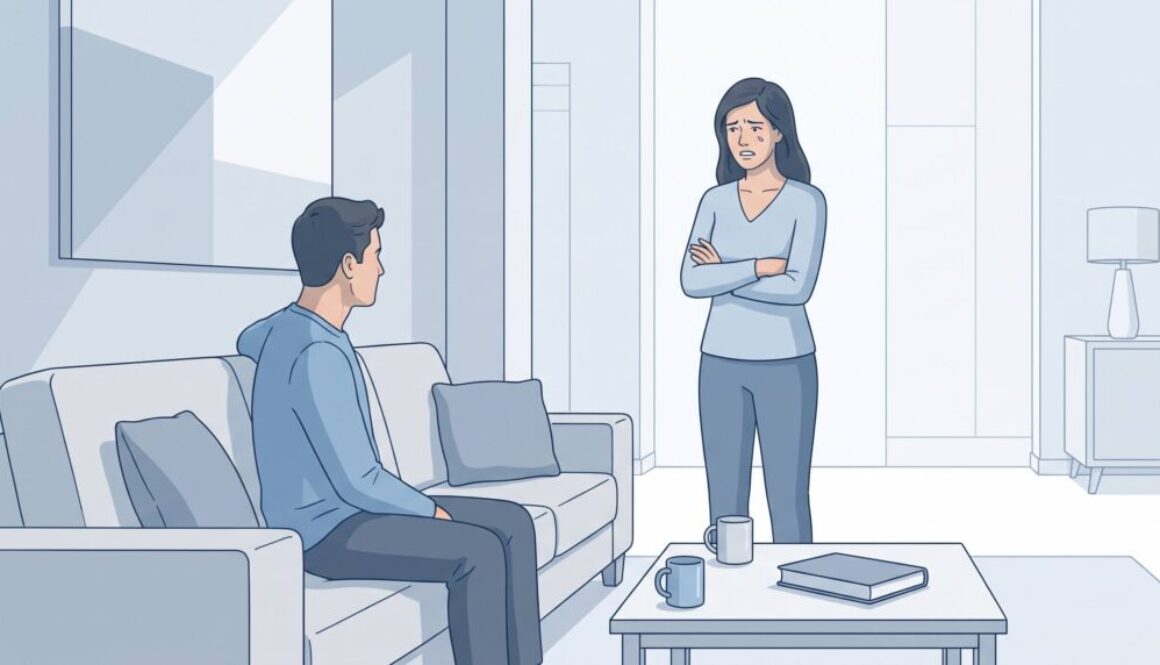
Jealousy Without Infidelity: The Relationship Pattern That Has Nothing to Do With What Your Partner Did
Let me tell you about a couple I worked with not long ago.
No affair. No emotional entanglement with someone else. No actual breach of trust in the conventional sense. And yet they were in more pain than many couples I see who are recovering from something that unambiguously happened.
She checked his phone. He knew she was checking it. So he started deleting ordinary conversations, not because he had anything to hide, but because the constant surveillance felt suffocating. When she found the deleted messages, her jealousy intensified. When her jealousy intensified, his withdrawal deepened. Around and around they went, neither of them able to name what was actually happening or find a way out.
This is what chronic jealousy looks like inside a relationship when nothing has actually gone wrong. It is more common, more painful, and more misunderstood than I expected when I began to encounter it in my work with couples.
What We Usually Get Wrong About Jealousy
Most people understand jealousy as a response to something real. Your partner flirted with someone. You found a suspicious text. There was a moment that crossed a line. In those situations, jealousy makes obvious sense as an emotional response.
But what about when nothing has happened?
When one partner experiences chronic, pervasive jealousy without any actual betrayal, and the relationship still starts eroding under the weight of it, something entirely different is at work. This is not jealousy as a reasonable response to a specific event. This is jealousy as a pattern, driven not by what the partner did but by what the jealous partner’s nervous system has learned to fear.
The distinction matters enormously, because the path forward is completely different depending on which kind of jealousy you are actually dealing with.
What the Research Tells Us
Peter Salovey and Judith Rodin published some of the most important early work on jealousy in the 1980s, appearing in the Journal of Personality and Social Psychology. Their research helped lay the groundwork for what psychologists now understand about jealousy’s structure and function, including the conditions under which it emerges in the absence of any objective threat.
What followed over the next several decades was a body of research that genuinely changed how therapists understand this experience. The most important finding, for our purposes, comes from a 1997 study by Don Sharpsteen and Lee Kirkpatrick, also published in the Journal of Personality and Social Psychology.
Their research found that adults with anxious attachment, the attachment style characterized by a deep, chronic fear of abandonment and a profound need for reassurance from a partner, were significantly more likely to experience jealousy in their close relationships, and to experience it with greater intensity. Critically, this jealousy was not reliably triggered by evidence of actual threat. It was triggered by the felt sense that security was perpetually at risk.
Hazan and Shaver established in their landmark 1987 paper, also in the Journal of Personality and Social Psychology, that the attachment patterns formed in childhood do not disappear when we become adults. They migrate directly into our romantic relationships, where they continue to organize how we perceive threat, how we seek comfort, and how we respond when we fear losing the person we love.
Robert Bringle, one of the leading researchers in this area, developed the concept of dispositional jealousy: the idea that some people carry a stable tendency toward jealous response that functions as an internal amplifier. Whatever incoming signal the relationship produces, the amplifier turns it up. A partner who takes a few extra minutes to respond to a text becomes a cause for alarm. A comment about an attractive colleague becomes evidence of something more. A deleted voicemail becomes proof.
The amplifier is not the partner. The amplifier is inside the person experiencing the jealousy, and it was almost certainly installed long before this relationship ever began.
Gregory White and Paul Mullen, in their comprehensive clinical text on jealousy published by Guilford Press, noted that jealousy in long-term relationships is rarely just about the feared rival or the feared loss. It is about the entire relational context in which it occurs, including the patterns of pursuit and withdrawal that it generates over time.
The Riptide This Creates
Here is what I want you to understand about what happens when chronic, attachment-based jealousy enters a relationship: it creates a riptide.
I use that word deliberately. You are having what seems like an ordinary moment, or you are simply living your life together, and then without quite knowing how you got there, you are pulled out to sea. The argument is raging. Both partners feel unsafe. Neither person understands exactly what just happened.
With jealousy and surveillance, the riptide has a very specific shape.
One partner, driven by an anxious attachment system that is constantly scanning for evidence of abandonment or rejection, begins monitoring. They check the phone. They ask questions that feel like interrogations. They analyze tone and body language for signs of something wrong. They interpret ordinary behaviors as potential threats.
The other partner, experiencing this monitoring as a constant accusation, begins to feel suffocated. They are not doing anything wrong, and yet they are being treated as though they are. So they begin to pull away. Not because they are hiding something, but because the relationship no longer feels like a safe place to exist.
Here is the part that breaks my heart every time I see it: the withdrawal of the surveilled partner reads to the anxious partner as confirmation that they were right to be worried. So the monitoring intensifies. And the withdrawal deepens. And now both partners are locked in a cycle that has nothing to do with what either of them actually wants and everything to do with a pattern neither of them chose.
What Both Partners Are Saying on the Inside
In my work with couples, I spend a great deal of time on what I call the inner dialogue. This is the voice running in your head during moments of relational stress that never quite makes it out of your mouth but is driving your behavior completely.
For the partner experiencing the jealousy, the inner dialogue often sounds something like this: I am not important enough for them to stay. I know something is wrong, I just cannot prove it. If I am not paying attention, I will miss the moment when everything falls apart. I am always the one who ends up alone.
For the partner experiencing the surveillance, the inner dialogue often sounds something like this: I cannot get anything right. I am being treated like a criminal for simply existing. No matter what I do, it will never be enough. I am disappearing inside this relationship.
Both of these inner dialogues are real. Both are painful. Neither partner is wrong about what they are feeling. But neither inner dialogue is an accurate read of what is actually happening between them. The jealous partner is not perceiving a real threat. The surveilled partner is not actually failing.
What both of them are experiencing is the riptide. And the riptide is the pattern, not the person.
How the Fixer and Connector Dynamic Plays Into This
In my experience, this particular jealousy and surveillance pattern tends to fall along recognizable lines within the Fixer and Connector framework I use in my work with couples.
Connectors, whose core need is to feel important, prioritized, and genuinely connected to their partner, are particularly vulnerable to attachment-based jealousy when those needs go unmet. The inner dialogue of the Connector who is experiencing jealousy is often rooted in the fear that they are not truly chosen, not truly a priority, not truly safe in the relationship. The surveillance, as painful as it becomes for both partners, is the Connector’s attempt to manage an anxiety that feels otherwise unmanageable.
Fixers, whose core need is to feel trusted and appreciated for what they bring to the relationship, experience the surveillance as a direct attack on their integrity. They are not given the benefit of the doubt. Their intentions are constantly questioned. And so they withdraw, because the relationship begins to feel like a situation in which they simply cannot win.
When these two styles collide in this pattern, the riptide is particularly intense and particularly difficult to escape without the right tools, because both partners are responding logically from within their own framework and yet making everything worse with each response.
What Does Not Help (and What Does)
I want to say this clearly: checking the phone does not solve jealousy. Having access to every password does not solve jealousy. Demanding an accounting of every hour does not solve jealousy. These strategies might provide momentary relief to the anxious partner, but they do not address what is actually driving the pattern. Here’s the deal: sustainable relief from chronic jealousy requires changes to the relational context itself, specifically to the experience of felt security within the relationship.
What that means in practice is building genuine emotional safety between both partners, learning to communicate the vulnerable fear underneath the jealous behavior rather than the jealous behavior itself, and interrupting the surveillance and withdrawal cycle before it becomes fully entrenched.
For the jealous partner, this means learning to say what the inner dialogue is actually saying. Not “I checked your phone and I found something suspicious” but rather “I am terrified of being left, and when I feel that fear, I look for evidence because the uncertainty feels unbearable.” That is a vulnerable statement. It is also the only one that has any real chance of being received by the other person in a way that actually helps.
For the surveilled partner, this means coming to understand that the monitoring is not primarily about them. It is about an attachment system that learned, somewhere along the way, that security cannot be counted on. That understanding does not make the surveillance acceptable to live with indefinitely. But it changes the conversation from an accusation into something that can actually be worked with, and that shift changes everything about what becomes possible next.
Where to Begin If This Sounds Like Your Relationship
If you recognize yourself or your relationship anywhere in this post, whether you are the one who monitors or the one who has started disappearing inside the relationship, I want you to know something with certainty: this pattern is not evidence of incompatibility. It is not proof that your partner does not love you. It is not a sign that you are broken.
It is evidence that you are caught in a riptide with a specific shape, a specific history, and a specific path out. Patterns can change. The two of you can get there.
The Become One Again programs at becomeoneagain.com were built for exactly this kind of work. The Communication Course for Couples introduces the Fixer and Connector framework, the inner dialogue concept, and the trigger identification tools that give both partners the language they need for what is happening beneath the surface of their conflict. This is where the jealousy cycle and the surveillance cycle begin to make sense to both people in a way that creates understanding rather than defensiveness.
The Marriage Rescue Plan goes further, building the emotional safety and daily trust rituals that create the felt security attachment-based jealousy is reaching for. Week by week, couples learn to speak to what is actually underneath, rather than the behavior on the surface, which is the only conversation that actually moves anything.
If you are not sure yet where you fall in the Fixer and Connector framework, the free quiz at becomeoneagain.com takes about ten minutes and gives you a detailed, personalized report. It is a good starting point for understanding yourself and, just as importantly, understanding your partner.
And if you want to talk through where you are before choosing a path forward, the free 20-minute consultation is available for exactly that. No pressure, no obligation. Just a conversation.
Jealousy without infidelity does not have to be the permanent climate of your relationship. The pattern is the problem. And the pattern can change.
Resources:
Differentiation of social-comparison jealousy and romantic jealousy. P Salovey, J Rodin – 1986
Romantic jealousy and adult romantic attachment. DJ Sharpsteen, LA Kirkpatrick – 1997
Romantic love conceptualized as an attachment process. C Hazan, P Shaver – 1987
Conceptualizing jealousy as a disposition. RG Bringle – 1981
Self-Report Jealousy Scale. RG Bringle – 1987
Jealousy: Theory, research and clinical strategies. GL White, PE Mullen – 1989
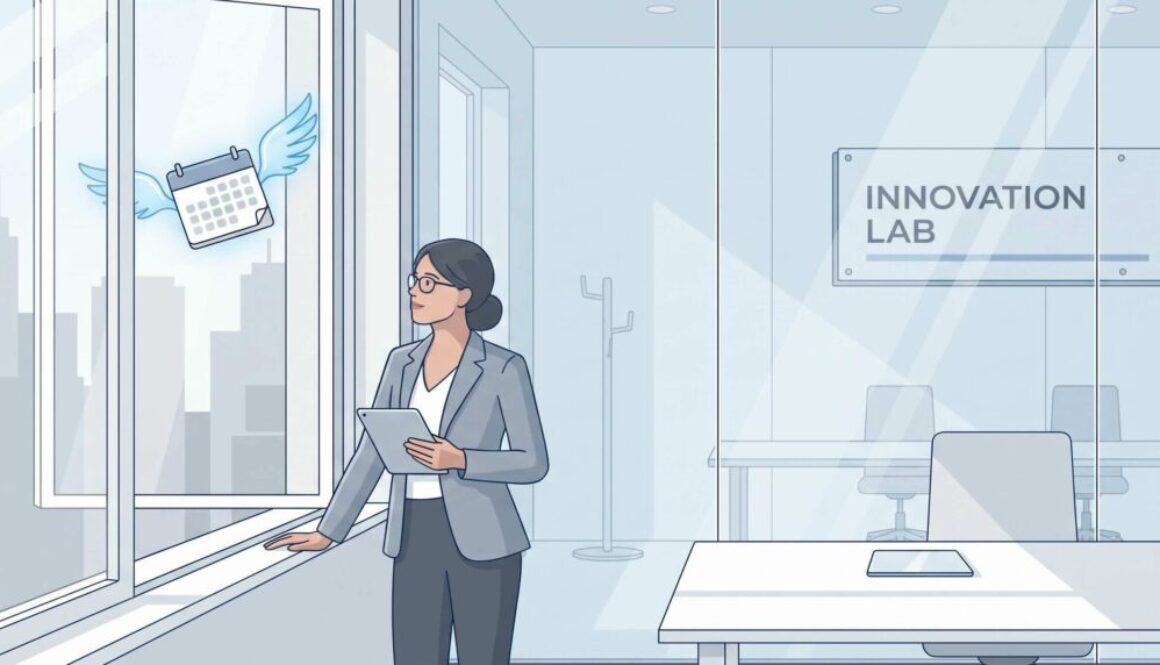
Menopause and Your Relationship: What the Research Reveals and What Both Partners Need to Know
Most couples arrive at midlife without a roadmap. They have navigated new parenthood, career changes, perhaps a move or two. But nobody prepares them for what happens when menopause enters the relationship. Not just to the woman experiencing it, but to the partnership itself.
This is one of the most underaddressed conversations in the couples therapy space. Women in perimenopause and menopause frequently describe managing symptoms alone, reluctant to explain what is happening to their bodies because they do not fully understand it themselves. Their partners, often equally confused, misread the changes. And the conflict cycle that was already present begins to intensify in ways neither person can quite name.
The clinical research is clear: menopause does not have to damage a relationship. But without understanding, without language, and without the right communication tools, the transition can deepen existing disconnection in ways that outlast the symptoms themselves.
The Transition Begins Earlier Than Most Couples Realize
The word menopause refers technically to a single point in time: the twelve-month anniversary of a woman’s final menstrual period. In the United States, that moment arrives for most women around age 51. But the transition toward it, known as perimenopause, typically begins in a woman’s mid-to-late 40s and can last anywhere from four to ten years.
During perimenopause, estrogen and progesterone levels fluctuate erratically before their eventual decline. These are not small changes. The hormonal variability of perimenopause can be more pronounced and more disruptive than anything that follows. Hot flashes, sleep disruption, mood instability, changes in memory and concentration, and shifts in sexual desire can all begin years before the final period, and years before most couples think to connect those experiences to anything hormonal.
The result is a long runway of symptoms that often get misattributed. The irritability becomes “she’s just stressed.” The decreased libido becomes “she’s not interested in me anymore.” The fatigue and withdrawal become evidence of some unnamed distance in the relationship. By the time a couple understands what has actually been happening, they may have spent years building resentment and disconnection around symptoms that were physiological rather than interpersonal.
What the Research Reveals About Menopause and Relationship Quality
Lorraine Dennerstein’s Melbourne Women’s Midlife Health Project, a landmark longitudinal study published across multiple journals including Climacteric and Maturitas, followed Australian women across the menopausal transition for nearly a decade and produced one of the most nuanced pictures of how menopause affects intimate relationships. The findings challenged the assumption that menopause itself is the primary driver of sexual and relational difficulties in midlife.
What Dennerstein and colleagues found was that while menopausal symptoms, particularly vaginal dryness, hot flashes, and sleep disruption, did contribute to sexual difficulties, the strongest predictors of sexual function were relational. Specifically, a woman’s feelings about her partner and the quality of their emotional connection proved more predictive than hormonal status alone. In other words, the relationship environment matters at least as much as the hormonal environment.
This finding has enormous clinical implications. Couples who have built a foundation of emotional safety and genuine connection are significantly better positioned to navigate the menopause transition than couples whose baseline dynamic involves chronic disconnection, unresolved conflict, or the kind of emotional distance that accumulates slowly over years.
The Study of Women’s Health Across the Nation, an NIH-funded longitudinal project tracking over three thousand midlife women across seven sites in the United States, has produced extensive research on menopausal symptoms and their relational impact. Published findings from this cohort, including work by Avis and colleagues on sexual function and Bromberger and colleagues on psychological symptoms, document that depression risk is elevated during the perimenopausal transition. Some analyses suggest the risk of a first depressive episode is roughly twice as high during perimenopause compared to premenopausal baseline levels, even for women with no prior history of depression.
Ellen Freeman and colleagues at the University of Pennsylvania published research in the Archives of General Psychiatry examining hormonal fluctuation as a predictor of depression during the menopausal transition. The erratic estrogen swings of perimenopause, not simply low estrogen levels, appear to be a significant driver of mood instability in this period. This is clinically important because it explains why mood changes during perimenopause can feel disproportionate to circumstances, because in part they are physiologically driven rather than situationally caused.
The Symptoms That Hit Relationships Hardest
Several specific symptoms of the menopausal transition tend to create the most significant relationship strain, and each one operates through a distinct mechanism.
Sleep disruption, driven primarily by night sweats and hot flashes, affects both partners. Research through the SWAN study documented that vasomotor symptoms frequently interrupt sleep for women during this transition. Sleep deprivation at the level that menopause can produce is not a minor inconvenience. It impairs emotional regulation, reduces empathy, lowers frustration tolerance, and increases reactivity to interpersonal stress. For couples already navigating a conflict cycle, the sleep-deprivation layer makes that cycle harder to interrupt and easier to escalate. Both partners wake tired, both are operating with diminished resources, and the ordinary friction of shared life becomes disproportionately activating.
Mood variability, often described by women going through perimenopause as feeling unlike themselves, creates a relational puzzle for both partners. The woman experiencing it frequently cannot predict or explain her own emotional state. The partner observing it from the outside tends to do what most partners do with confusing behavior: they make it about themselves. The Fixer-style partner may cycle into the familiar inner dialogue of “nothing I do is ever enough.” The Connector-style partner watching their menopausal partner withdraw may intensify their pursuit, reading the withdrawal as rejection. Neither interpretation is accurate, but both feel completely real in the moment.
Cognitive changes, sometimes called brain fog, have been documented in research including work by Greendale and colleagues published in Neurology, which examined cognitive performance across the menopausal transition in midlife women. These changes can include word-retrieval difficulties, reduced working memory, and slower processing speed. They are generally temporary and typically resolve after the transition completes. But during perimenopause and the early postmenopausal period, they can be deeply distressing for the woman experiencing them and genuinely baffling to a partner who notices the shift without knowing its source.
Changes in sexual desire are where the relational stakes become most acute. And this is where the research offers its most practically useful insight.
Responsive Desire: The Research Finding That Changes Everything
Rosemary Basson, a Canadian physician and researcher, proposed a model of female sexual response published in the Journal of Sex and Marital Therapy in 2001 that fundamentally reframed how clinicians understand desire in long-term relationships. The traditional assumption is that desire arises spontaneously and then triggers the pursuit of intimacy. That describes the experience of some people some of the time. But it does not describe the dominant pattern for most women in established partnerships, and it becomes even less accurate during and after the menopausal transition.
Basson’s responsive desire model proposes that for many women, desire is not the starting point but a response to intimacy cues once engagement has begun. A woman who does not feel spontaneously drawn toward sex may, once physical and emotional closeness has been initiated in a safe and non-pressured environment, find that desire follows willingness. The capacity for connection, pleasure, and genuine desire remains intact. What changes is the pathway to access it.
What this means practically for couples navigating menopause is significant. A decrease in spontaneous desire is not the same as a decrease in the capacity for desire, connection, or pleasure. But if a partner interprets the absence of spontaneous initiation as disinterest or rejection, and responds by withdrawing, becoming frustrated, or stopping initiation altogether, the conditions for responsive desire to emerge never materialize. The couple concludes that intimacy is no longer possible when in fact it has simply become unavailable under the conditions they have been trying to create.
This is exactly the kind of misread that the Riptide describes. One partner’s physiological change triggers a response in the other, which triggers a counter-response, and both people end up further from connection than either wants to be.
The Misreading Problem
The most common clinical pattern in couples navigating menopause is not dishonesty or avoidance. It is misinterpretation operating simultaneously on both sides, often without either person realizing it.
The woman going through the transition is frequently dealing with symptoms she has not fully named or explained, managing physical discomfort, and grappling with an identity shift that the culture provides almost no language for. She may be pulling back from intimacy not because she has stopped wanting connection but because her body is unpredictable, uncomfortable, or exhausted. She may be more emotionally reactive not because something is wrong with the relationship but because her nervous system is under genuine physiological stress.
Her partner, observing all of this from the outside, is trying to make sense of changes that arrived without explanation. When the person you love withdraws, becomes irritable, loses interest in sex, and seems distant, the most natural and most damaging conclusion is that something has shifted in how they feel about you. The Fixer partner’s inner dialogue activates: “I can’t get this right, nothing I do is ever enough.” The Connector partner’s inner dialogue activates: “I’m not important anymore, I’m alone in this relationship.” The conflict cycle intensifies, not because the relationship is failing, but because neither person has the information or the language they need.
This is why the finding from the Melbourne Women’s Midlife Health Project is so practically useful. The quality of the emotional relationship is not the cause of what is happening during menopause. But it is the primary lever for navigating it.
What Actually Helps
The couples who navigate the menopausal transition with the least damage to their relationship share a few consistent qualities. They have enough emotional safety that the woman going through the transition can name what is happening without fear of dismissal or criticism. They have communication tools that allow both partners to speak to what is underneath the surface behavior rather than reacting to it. And they have a shared understanding that the pattern pulling them apart is the problem, not the person.
Building those qualities is not automatic. It is a set of skills, the same skills that determine how any couple navigates any significant life transition. The ability to interrupt the conflict cycle before it escalates, to name internal experience rather than leading with reactive behavior, and to approach a partner’s changed presentation with curiosity rather than defensiveness: these are learnable. And they are the difference between a transition that strengthens a relationship and one that leaves lasting damage.
None of this requires the menopausal partner to over-explain her symptoms, and it does not require the other partner to become a caregiver. It requires both people to understand that the pattern they are caught in has a name, and that naming it changes what they can do about it.
You Don’t Have to Navigate This Alone
If you and your partner are in the middle of this transition, or if you recognize that years of accumulated misreading have left real distance between you, the tools that help are available.
My Become One Again programs at becomeoneagain.com were built for couples who want to understand each other at the level that actually produces change. The Marriage Rescue Plan is an eight-week program that gives couples the complete framework: from stopping the conflict cycle and building emotional safety to healing accumulated hurt, rekindling genuine intimacy, and creating the kind of relationship that can hold a significant life transition without fracturing.
It includes a dedicated week on rekindling emotional and physical intimacy that speaks directly to the terrain menopause creates, including the responsive desire model and what it looks like in practice.
The Communication Course for Couples is a six-week program focused specifically on the Fixer and Connector communication styles, the inner dialogue that fuels the cycle, and the practical language for speaking to what is actually happening between you rather than responding to what you each are assuming.
Both programs are available at becomeoneagain.com. A free Fixer or Connector quiz takes about 5 minutes and gives both partners a concrete starting point for understanding the dynamic they are living inside. A free 20-minute consultation is also available for couples who want to talk through where they are before deciding on a path forward.
Menopause is a transition, not an ending. The relationship on the other side of it can be more honest, more resilient, and more genuinely intimate than what came before — if both partners have the tools to get there together.
References
Basson, R. (2001). Human sex-response cycles. Journal of Sex & Marital Therapy, 27(1), 33–43. https://doi.org/10.1080/00926230152035831
Basson, R. (2001). Using a different model for female sexual response to address women’s problematic low sexual desire. Journal of Sex & Marital Therapy, 27(5), 395–403. https://doi.org/10.1080/713846827
Bromberger, J. T., Kravitz, H. M., Chang, Y.-F., Cyranowski, J. M., Brown, C., & Matthews, K. A. (2011). Major depression during and after the menopausal transition: Study of Women’s Health Across the Nation (SWAN). Psychological Medicine, 41(9), 1879–1888. https://doi.org/10.1017/s003329171100016x
Bromberger, J. T., Matthews, K. A., Schott, L. L., Brockwell, S., Avis, N. E., Kravitz, H. M., Everson-Rose, S. A., Gold, E. B., Sowers, M., & Randolph, J. F. (2007). Depressive symptoms during the menopausal transition: The Study of Women’s Health Across the Nation (SWAN). Journal of Affective Disorders, 103(1–3), 267–272. https://doi.org/10.1016/j.jad.2007.01.034
Dennerstein, L., Alexander, J. L., & Kotz, K. (2003). The menopause and sexual functioning: A review of the population-based studies. Annual Review of Sex Research, 14, 64–82. https://doi.org/10.1080/10532528.2003.10559811
Freeman, E. W., Sammel, M. D., Lin, H., & Nelson, D. B. (2006). Associations of hormones and menopausal status with depressed mood in women with no history of depression. Archives of General Psychiatry, 63(4), 375–383. https://doi.org/10.1001/archpsyc.63.4.375
Greendale, G. A., Huang, M.-H., Wight, R. G., Seeman, T., Luetters, C., Avis, N. E., Johnston, J., & Karlamangla, A. S. (2009). Effects of the menopause transition and hormone use on cognitive performance in midlife women. Neurology, 72(21), 1850–1857. https://doi.org/10.1212/wnl.0b013e3181a71193
ADHD and Relationships: What the Research Reveals About Why This Pattern Feels So Hard to Break
ADHD rarely shows up in a relationship the way either partner expects. It doesn’t arrive with a warning label. It arrives as a pattern: one partner forgetting important conversations, one partner perpetually exhausted by carrying the relational load, and both of them stuck in a cycle of frustration, resentment, and disconnection that neither can quite explain.
If this sounds familiar, what you’re experiencing has a name. And more importantly, it has an explanation that has nothing to do with how much you love each other.
The Research Is Clear: ADHD Changes Everything About How a Relationship Functions
Attention deficit hyperactivity disorder affects approximately 4 to 5 percent of adults in the United States, according to data from the National Comorbidity Survey Replication. But its impact inside a relationship is disproportionate to those numbers, because ADHD doesn’t just affect the individual who carries the diagnosis. It fundamentally reshapes the relational dynamic between both people.
Russell Barkley, one of the world’s foremost authorities on ADHD and among its most cited researchers, has described the condition as primarily a disorder of executive function and self-regulation rather than simply a problem of attention. This reframing matters enormously for couples, because it explains why ADHD looks so different from the outside than it feels on the inside. The ADHD partner isn’t choosing to forget important things, arrive late, interrupt conversations, or leave projects unfinished. These behaviors are downstream of genuine neurological differences in how the brain regulates attention, time, impulse, and emotion.
Research consistently shows that adults with ADHD experience significantly higher rates of relationship breakdown than the general population. Barkley and colleagues’ longitudinal work on ADHD adults documented elevated rates of separation and divorce alongside greater reports of relationship dissatisfaction from both partners. A study by Wymbs and colleagues published in the Journal of Consulting and Clinical Psychology found that parents with ADHD faced substantially elevated divorce rates compared to parents without the diagnosis. These are not small differences, and the research points toward a consistent underlying mechanism.
Emotional Dysregulation: The ADHD Symptom No One Warns You About
When most people think of ADHD, they picture inattention and hyperactivity. What the clinical research reveals is that emotional dysregulation may be among the most relationally destructive features of the condition.
Barkley has argued compellingly across multiple publications that emotional dysregulation is not simply a comorbidity of ADHD; it is a core feature. Adults with ADHD frequently experience emotions with an intensity and immediacy that is difficult to modulate. Frustration escalates faster. Rejection, even minor or perceived rejection, can land with the force of a genuine rupture. Neutral observations register as criticism. Joy is more urgent, and disappointment cuts deeper than the situation seems to warrant.
For the partner without ADHD, this is bewildering. A mild request to clean the kitchen transforms, in seconds, into what feels like a confrontation. An attempt to revisit a previous conversation becomes an emotional flashpoint. Over time, the non-ADHD partner begins to walk on eggshells, managing their tone, choosing words carefully, and bracing for reactions that feel disproportionate to what actually happened.
That pattern has a name in relationship research: mutual dysregulation. One partner’s nervous system reads cues from the other, escalation feeds escalation, and both people end up flooded and reactive in ways neither planned. In the context of ADHD, this cycle activates more frequently and with less provocation than in couples where ADHD is not a factor. It is one of the fastest ways a relationship ends up caught in a destructive pattern that neither person chose.
The Hyperfocus Courtship and What Comes After
Melissa Orlov, whose 2010 book The ADHD Effect on Marriage remains one of the most clinically informed treatments of this subject available, describes a phenomenon she calls the hyperfocus courtship.
ADHD brains are not uniformly inattentive. When something is genuinely novel, personally compelling, or emotionally stimulating, the ADHD brain can produce extraordinary levels of focused engagement. In early romantic relationships, a new partner often triggers exactly this response. The ADHD partner is fully present, intensely attentive, and deeply engaged. The partner without ADHD experiences this as remarkable chemistry and genuine connection.
Then, over time, the novelty fades. The ADHD brain shifts toward whatever is next. The partner who felt so seen and prioritized now feels invisible, and the ADHD partner often has limited awareness of what changed, because the shift happened at a neurological level rather than a conscious one.
This transition from hyperfocus to apparent disengagement is one of the most common precipitating wounds in ADHD relationships. The non-ADHD partner frequently interprets it as a signal that the original connection wasn’t real, or that they no longer matter, or that the ADHD partner simply doesn’t care anymore. None of these interpretations are accurate. But without an understanding of the underlying mechanism, they feel completely logical.
The Parent-Child Dynamic: How Resentment Becomes a Structure
Over time, many ADHD couples develop what Orlov and other clinicians describe as the parent-child dynamic. It emerges not from anyone’s conscious intention, but from a practical logic that takes hold gradually.
The non-ADHD partner, tired of waiting for things to be done consistently, begins managing, reminding, and covering. They take on the household planning, the financial tracking, the social scheduling, the emotional management of family life. They become, in effect, the executive function their partner’s brain struggles to provide reliably.
The ADHD partner, for their part, often feels simultaneously controlled and inadequate. They know they’re dropping things. They hate it. The reminders, however well-intentioned, land as criticism. A recognizable pattern begins to develop: the ADHD partner withdraws, shuts down, and retreats into the belief that nothing they do will ever be enough. The non-ADHD partner, feeling increasingly alone in the relationship, escalates their pursuit, intensifies their requests, and tries harder to reach someone who appears to be closing off entirely.
This is the riptide in an ADHD relationship. And like all riptides, it pulls both partners further under the harder they individually try to fight it. The answer is never to swim harder against the current. The answer is to understand what the current actually is, and to find a way out together.
What the Non-ADHD Partner Is Carrying
The research on ADHD’s relational impact frequently focuses on the symptoms of the ADHD partner. What is less consistently addressed in popular discussions is what happens to the person without ADHD who has been living inside that dynamic for years.
Research published in the Journal of Attention Disorders examining the marital and family functioning of adults with ADHD documented not only lower relationship satisfaction in the ADHD group, but substantial distress in the non-ADHD spouses as well. Partners reported higher rates of depression, greater feelings of loneliness, and a pervasive sense that the relationship was imbalanced in ways that couldn’t be resolved through individual effort alone.
These findings are consistent with what emerges consistently in clinical practice. The non-ADHD partner often arrives carrying the accumulated weight of years of over-functioning. They are exhausted, frequently resentful, and often ashamed of that resentment because they know their partner isn’t doing this deliberately. Loving someone whose brain works differently doesn’t make the weight lighter. It just makes it harder to put down.
Why Willpower and Good Intentions Are Not Enough
One of the most important things research tells us about ADHD in relationships is that insight and intention alone are not sufficient to change the patterns. An ADHD partner who sincerely wants to show up consistently, regulate their emotions, remember what matters, and follow through will still encounter executive function limitations that no amount of effort directly overrides.
For the ADHD brain, dopamine dysregulation affects motivation and time perception (chronically existing in “Now” vs. “Not Now”).
Barkley’s work on self-regulation in ADHD consistently makes the point that external systems and environmental scaffolding are more effective than relying on internal motivation or willpower alone. What this means for couples is that you need tools that work with how the ADHD brain actually functions, not against it. And both partners need a shared understanding of the pattern that replaces blame with a more accurate frame.
This is also why couples in ADHD relationships often feel as though they have tried everything and nothing sticks. Individual effort in isolation, without a structural change in the dynamic itself, is a bit like bailing water from a boat without addressing the hole. The water keeps coming back. The pattern keeps reasserting. Not because either person lacks commitment, but because the cycle has a logic of its own that good intentions alone cannot interrupt.
What Actually Helps: Moving From Blame to a Shared Framework
Research on couples navigating ADHD points toward several elements that distinguish relationships that function well from those that remain stuck.
A shared and accurate understanding of what ADHD actually is, and how it specifically manifests in this relationship, replaces the most damaging interpretive framework: the one that reads ADHD behaviors as signals of not caring, not trying, or not valuing the relationship.
Structured agreements and clear communication practices, rather than reliance on memory or emotional availability in any given moment, reduce the load on executive function and reduce the number of moments where limitations become the flashpoint for conflict.
An understanding of each partner’s internal experience during conflict, what they are actually feeling on the inside, what their nervous system is doing, and what they genuinely need in those moments, creates the foundation for communication that speaks to what is underneath rather than reacting to the surface behavior.
This is the work that the Become One Again framework is designed to support. The Riptide concept, the Fixer and Connector archetypes, the tools for interrupting the cycle before it escalates, and the structured practices for rebuilding emotional safety all map directly onto what ADHD relationships require. The Fixer’s inner dialogue of “I can never get this right” is rarely more present or more painful than in an ADHD relationship. The Connector’s inner dialogue of “I am not a priority” is rarely more consistently reinforced. And the cycle that develops between those two positions is precisely the kind of pattern that structured, practiced intervention is built to interrupt.
You Don’t Have to Figure This Out Alone
If ADHD is in your relationship, whether it is formally diagnosed or simply something you are beginning to recognize, you are navigating something genuinely difficult. The research is clear that these dynamics are real, that they are common, and that they carry significant costs for both partners when they go unaddressed. The research is equally clear that understanding the pattern changes everything.
My Become One Again programs were built for exactly this kind of work. The eight-week Marriage Rescue Plan gives couples a structured, week-by-week framework to stop the fighting, rebuild emotional safety, understand each other’s internal experience, and restore genuine connection, whether ADHD is part of the picture or not.
The six-week Communication Course for Couples provides a deep foundation in the Fixer and Connector framework and the communication tools that make breaking the cycle actually possible.
Both programs include 6 private one on one coaching sessions to help re-enforce what you’re learning in each course.
If you’re ready to understand what is actually running your relationship and to build something better than the pattern you’ve been caught in, the free Fixer or Connector quiz at becomeoneagain.com is the place to start. It takes about five minutes and typically gives couples more clarity about their relational dynamic than years of trying to figure it out on their own.
You can also schedule a free 20-minute consultation at becomeoneagain.com.
The pattern is the problem. Not the person. That is true whether ADHD is in the room or not.