
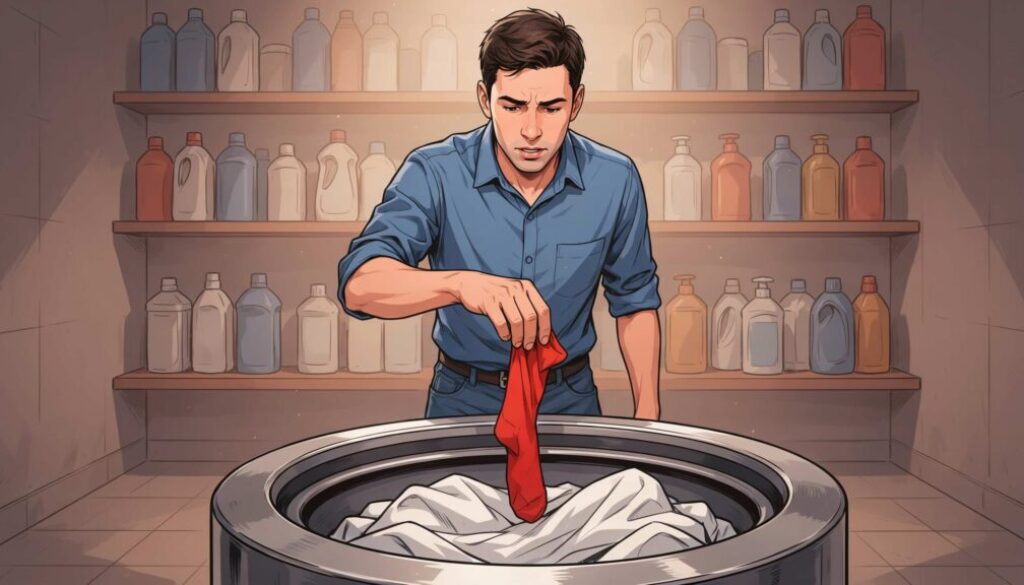
Weaponized Incompetence in Relationships — What the Research Actually Shows (And Why the Label Alone Won’t Fix It)
You asked him to handle bedtime. He tried, once, and it took three times as long as it should have. The kids were still up past ten, and somehow by the end of it you were in there finishing anyway. Now you don’t ask anymore.
You delegated the grocery shopping. He came back with the wrong brands and half the list missing, and when you mentioned it he shrugged and said, “I never know what you want.” So now you do the shopping.
You tried to hand off the finances. He looked confused, asked six questions he could have Googled, and eventually just passed the whole thing back. Easier that way.
If any of this sounds familiar, you have likely encountered what has been widely named, in online forums, in women’s groups, and now increasingly in couples therapy offices, as weaponized incompetence.
The term is everywhere right now. And for good reason: it names something that millions of people in long-term partnerships have experienced but never quite had language for. What it describes is a pattern in which one partner consistently performs tasks badly enough, or claims inability convincingly enough, that they are gradually excused from responsibility for them entirely. The partner on the receiving end is not imagining it. The pattern is real, the frustration is legitimate, and the relational damage it produces is well-documented in research on household labor, perceived fairness, and marital quality.
There is one important caveat worth naming upfront: “weaponized incompetence” as a specific term does not yet appear in peer-reviewed literature. What has been studied, extensively, are the behavioral patterns and relational consequences it describes. The research on those patterns is solid. The term is a useful cultural shorthand for something the data has been capturing for decades under different names.
Here is what we actually know.
The Research Behind the Pattern
The term is new. The behavior is not.
Sociologist Arlie Hochschild documented it in 1989, though she called it something else entirely. In her landmark study The Second Shift, Hochschild followed dual-income couples over eight years and found that women employed full-time were still performing roughly an extra month of 24-hour days of domestic labor annually compared to their male partners. More striking than the data was what she observed in the interviews: in some households, the inequality was maintained not through explicit negotiation but through a quiet, gradual process in which one partner’s demonstrated competence contracted to whatever the other was willing to absorb.
Thomas Greenstein’s research, published in the Journal of Marriage and Family, took this further. He found that the actual number of hours contributed to household labor was less predictive of marital dissatisfaction than perceived fairness. Women who felt the division was unjust reported significantly lower marital quality regardless of how many hours they were actually contributing. The resentment was not primarily about the tasks. It was about what the imbalance communicated.
Mylène Lachance-Grzela and Geneviève Bouchard’s 2010 meta-analysis in Sex Roles synthesized a decade of research on why disproportionate household labor persists even in households where both partners work equal hours professionally. Their findings synthesized a decade of data across time availability and economic resources, highlighting how deeply entrenched traditional gender roles remain, dynamics that seamlessly map onto what popular culture now recognizes as an unintended incentive structure. When incompetence is rewarded with relief from responsibility, the incompetence persists. Not necessarily because the person is incapable, but because the incentive structure actively discourages developing competence.
This is where Martin Seligman’s concept of learned helplessness becomes conceptually relevant, with an important distinction. In Seligman’s original research, learned helplessness develops when a person encounters repeated situations where their efforts appear to have no effect, and over time they stop trying. In the household context, something adjacent can develop when a partner discovers, consciously or not, that doing something poorly has a reliable outcome: being relieved of the task entirely. Whether this is strategic or simply the path of least resistance, the structural result is the same. One partner carries more, and over time, they carry all of it.
Alfred DeMaris’s research in the Journal of Marriage and Family documented the destructive nature of chronic relationship inequity, demonstrating a measurable decline in long-term marital quality specifically linked to perceived unfairness in domestic contribution. Not the chores themselves. The signal those chores send.
What Makes It Weaponized
The word “weaponized” is pointed, and it’s worth sitting with that for a moment.
Because the truth is that most people engaging in this pattern are not sitting down and consciously plotting: how do I use apparent incompetence to get out of my responsibilities? The dynamics that sustain it are usually more layered than that.
What distinguishes weaponized incompetence from garden-variety incompetence is the combination of two specific features. First, the helplessness is selective — the same person who cannot figure out how to fold laundry correctly can troubleshoot complex systems at work, plan a logistics-heavy vacation with precision, or navigate intricate professional problems without assistance. Second, and more importantly, attempts to address the pattern get deflected rather than genuinely engaged with. More confusion. More mistakes. More deferring. The conversation about fairness never quite lands.
That deflection is where the relational damage lives.
When the over-contributing partner attempts to address the imbalance — through requests, through expressed frustration, through direct conversation — and is met with defensiveness, excuses, or another demonstration of incapacity, a message gets communicated beneath the surface of the exchange. The message is: your time and capacity are sufficient justification for requiring you to use them. That message doesn’t need to be spoken aloud to land.
What It Does to a Relationship
The research on perceived fairness in household labor makes one thing consistent and clear: the damage is not logistical. It is relational.
John Gottman’s decades of research on what predicts relationship deterioration illuminates what happens when resentment accumulates without acknowledgment or repair. The specific mechanism matters here. Resentment erodes what Gottman calls positive sentiment override — the reservoir of goodwill that allows couples to interpret ambiguous moments charitably, to extend benefit of the doubt, to stay in connection when things get hard. When that reservoir runs dry, neutral interactions get read as hostile. Kindness feels suspicious. The distance between two people who share a home but no longer feel like partners becomes almost physical.
The over-functioning partner, often, though not always, a woman, tends to carry a private internal narrative that I recognize immediately in the couples I work with. I am doing this alone. They don’t see what I’m actually carrying. I’ve stopped asking because nothing changes. These internal monologues, running quietly beneath the surface of what looks from the outside like a functioning household, are the architecture of the disconnection. And once that disconnection has calcified long enough, the resentment itself becomes a barrier to vulnerability, to intimacy, to the kind of honest conversation that might actually change something.
You cannot hold years of unacknowledged resentment and be emotionally available to your partner simultaneously. The nervous system cannot hold both at once.
The Underlying Dynamic
Here is what I have observed repeatedly in this work: weaponized incompetence is almost never really about the tasks.
Beneath it, almost always, is a conversation that hasn’t happened — about what genuine partnership looks like between two specific people, about what each of them is carrying invisibly, and about whether both partners are truly seeing each other.
The over-functioning partner needs to be seen. Not thanked perfunctorily, not told they’re doing a great job — actually seen. They need to know that what they’re carrying has been noticed, that it is not simply assumed to be their natural domain, and that their partner views them as a teammate rather than a household manager. The unmet need underneath the frustration is almost always some version of: I am not a priority here. We are not a team.
The under-functioning partner, and this is where I ask couples to listen carefully, usually has their own interior experience that is less visible. Some feel genuinely inadequate, convinced they will do it wrong and be criticized in the attempt. Some have never been required to step into competence in a particular domain because someone else always stepped in first. Some are operating from a model of household roles they absorbed in their family of origin and never consciously examined. Some are protecting something they haven’t yet named.
None of that is an excuse. Accountability matters enormously. Owning your part in the dynamic, without blame-shifting, without deflecting, without using the other partner’s frustration as justification for continued withdrawal, is non-negotiable in any real path forward. But the most effective conversations about this pattern almost never start with assignment of intent. They start with honest curiosity about what is happening on both sides, and with a shared commitment to building something that actually functions as a partnership.
What This Isn’t
Before we go further, something needs to be said clearly.
Weaponized incompetence is real. The resentment it produces is legitimate. The partner experiencing this pattern is not overreacting and not imagining it.
And, this matters, the label itself can become a problem if it functions as a verdict rather than a description. When “weaponized incompetence” becomes the conclusion of a conversation rather than the beginning of one, when it forecloses curiosity about what might be happening underneath for the other partner, it can calcify the very dynamic it names. The goal is not to win the argument about who is doing less. The goal is to build something that actually feels like the partnership both people signed up for.
Those are meaningfully different objectives, and they require different conversations.
The Path Forward
If this pattern is present in your relationship, a few things consistently make a difference.
Naming it clearly, without accusation, and as a pattern rather than a character verdict, opens the door. Not “you do this on purpose” but “I’ve noticed tasks keep returning to me even after we’ve agreed to divide them, and I need us to talk about that honestly.”
Real ownership, from the under-functioning partner, of specific domains, without management from the over-functioning one, changes the incentive structure. Genuine ownership means that when the task doesn’t get done, the natural consequence falls on the person responsible for it. Not on the partner who stepped back.
And the hardest step: genuine curiosity about what the imbalance has been communicating to both people. What the over-functioning partner is really saying underneath the resentment. What the under-functioning partner is protecting or avoiding underneath the pattern. This is the conversation that changes things, and it almost always requires a structure and a framework that most couples don’t arrive at on their own.
In the work I do with couples, this dynamic appears in many of the households I work with. What I’ve found consistently is that it doesn’t resolve through task redistribution alone. It resolves when both partners understand what the imbalance has been communicating, and when they build an explicit shared structure that makes ownership clear, consequences natural, and the conversation about fairness one they can have without it collapsing into accusation or withdrawal.
If you recognize your relationship in what you’ve read here, the Marriage Rescue Plan addresses the over and under-functioning dynamic directly, including the emotional weight it places on both partners and the practical framework for rebuilding genuine partnership. The program includes a dedicated module on co-parenting and household alignment, which is where this dynamic most often becomes unsustainable for couples.
If you’re not sure where to start, the free Fixer or Connector quiz at Become One Again takes about three minutes and gives you a window into the communication patterns that tend to underlie this dynamic — and what’s driving it on both sides.
The resentment you’re feeling is real. And it doesn’t have to be the ending of this story.